Do you and your family want to immigrate to Nevada or elsewhere in the United States? Or perhaps you’re an immigrant already living in Nevada, and you want to gain permanent U.S. residency? One of the best ways to achieve this is through the EB-5 Immigrant Investor Program, which enables you to obtain a U.S. Green Card by investing in the country’s economy.
Although you can invest anywhere in the United States, there are certain benefits to investing in Nevada. If you live in Nevada or plan on moving there, you might also wish to invest in a project located close to home.
Just like in other parts of the United States, the easiest way to make an EB-5 investment in Nevada is through a regional center. This article explains everything you need to know about this process.
What Is the EB-5 Program?
Primary EB-5 Investment Requirements
What Is a Regional Center?
- Indirect Job Creation Counts Toward Your Total Job Creation
- Faster Form I-526E Approval for Rural TEA Projects
- Passive Management
Why Invest in a Regional Center?
EB5AN’s Far West Regional Center
EB-5 Investors Based in Nevada
How to Evaluate EB-5 Investment Projects in Delaware
Reasons to Immigrate to Nevada
Nevada: Population and Income Demographics
EB-5 Investment: Your Gateway to Permanent Residency in the U.S., Including Nevada
What Is the EB-5 Program?

The EB-5 Immigrant Investor Program is a program that allows foreign investors to gain permanent residency in the U.S. by investing in a new commercial enterprise (NCE). If, after two years, you are able to prove that your investment has generated and maintained 10 full-time jobs for U.S. workers, you can apply for an unconditional Green Card.
Read our article on the steps you need to take to obtain an EB-5 visa to learn more about the application procedure.
Primary EB-5 Investment Requirements
Investments made under the EB-5 program are required to meet certain criteria. These include:
- ➔ Investing a minimum of $1,050,000 in a project or business venture, or a minimum of $800,000 in an infrastructure project, or in a project or business venture located in a targeted employment area (TEA). All of EB5AN’s projects are located in TEAs and, therefore, qualify for the lower investment amount.
- ➔ Creating at least 10 full-time jobs for qualifying U.S. workers and sustaining these jobs for a minimum of two years. Those who invest through a regional center can count indirect and induced jobs towards job creation. We discuss this in greater detail later in this article.
- ➔ Investing in a new commercial enterprise.
- ➔ Maintaining the at-risk status of the investment and using lawfully sourced investment funds.
| 💡 What Is a Targeted Employment Area? |
A TEA is a part of the United States that is either a rural TEA or a high-unemployment TEA:
There are several benefits to investing in EB-5 projects located in a TEA, including:
EB5AN offers several projects located in rural TEAs. |
What Is a Regional Center?

EB-5 regional centers streamline the EB-5 investment process for potential EB-5 applicants. Investing through a regional center has several benefits:
Indirect Job Creation Counts Toward Your Total Job Creation
Investments that aren’t made through a regional center can only count full-time jobs created by their project—direct jobs—toward the required total of 10. If you invest through a regional center, however, full-time jobs generated because of your project—indirect jobs—also count.
Faster Form I-526E Approval for Rural TEA Projects
Once you have invested, you can apply to the EB-5 program by completing Form I-526E. This form requires you to provide details of the project you are investing in. A rural TEA project qualifies for priority processing, meaning your application will likely be processed faster.
Passive Management
Project managers acting for or on behalf of the NCE or the job-creating entity that owns and develops the project handle most of the business and fund management on behalf of investors. This is great if you want to avoid the hassle of managing a business yourself.
Why Invest in a Regional Center?
Potential EB-5 investors may select EB-5 investments located anywhere in the United States. However, opting for an EB-5 investment in Nevada offers several advantages:
Residency benefits are granted to all direct and indirect (via a regional center) EB-5 investors, irrespective of where in the United States the project is located; however, certain advantages apply to investing and living in Nevada.
- The EB-5 program is one of the fastest ways to gain U.S. permanent residency for the EB-5 investor, their spouse, and their unmarried children under 21 years of age.
- Retired Green Card holders can access their pensions earned abroad and in the United States. They may also qualify for Medicare and other social welfare programs.
- Green Card holders may apply for U.S. citizenship after five years of established permanent residency in the United States.
Employment Benefits
- Green Card holders are free to live and work anywhere in the United States.
- The EB-5 program does not require a visa sponsor (like a family member) or an employer sponsor.
- Green Card holders do not need an H-1B work visa to work.
- Nevada does not impose a state income tax, making it appealing to residents and investors.
- Nevada’s business-friendly tax structure includes no corporate income, franchise, or unitary taxes, reducing tax burdens and boosting profitability. However, businesses with over $4 million in gross revenue are subject to the Commerce Tax.
- Nevada’s base sales tax rate is 6.85%, but depending on the county, local taxes can raise this rate, Clark County going as high as %8.375.
| 💡 What Is an H-1B Visa? |
| An H-1B visa is a work visa that allows foreign workers to come to the U.S. for a limited period to work in a specialist field. An employer must sponsor an H-1B visa; it is not an immigration visa. |
Travel Benefits
- Green Card holders can leave and enter the country without being denied reentry. However, some travel restrictions apply.
- A bona fide resident and Green Card holder is free to travel to any part of the United States.
- State employees are eligible for travel expense reimbursements when required to travel for work, which includes allowances for mileage, meals, and lodging. Employees moving more than 50 miles for critical positions can also be reimbursed for relocation expenses.
Education Benefits
- Green Card holders have free access to public elementary, middle, and high schools and lower-cost in-state tuition at public colleges and universities.
- U.S. residency significantly improves the likelihood of admission to U.S. universities.
- Green Card holders may qualify for financial aid and scholarships.
- Permanent residents can work while studying, complete internships, and apply for postgraduate positions.
- Nevada’s voucher programs enable families to choose schools outside their local district, offering parents more flexibility in finding the best educational fit for their children.
EB5AN’s Far West Regional Center
Although EB-5 investors can make their EB-5 investment in projects located anywhere in the United States, those in Nevada may find it easier to invest in projects located within Nevada. Thankfully, EB5AN already has a USCIS-approved regional center in Nevada.
EB5AN’s Far West Regional Center contains 16 counties within Nevada, including Las Vegas, the state’s most popular city and economic hub, and Henderson, the state’s second most populous city and home to affluent residents.
EB-5 Investors Based in Nevada
EB5AN has EB-5 investment projects available to people already living in the United States, including Nevada. The EB-5 program is the best way to obtain U.S. permanent residency by investment.
If you are a foreign national considering an EB-5 investment, EB5AN can help you. Schedule a call to learn more about currently available EB-5 investment opportunities and join other bona fide residents who have immigrated through the EB-5 program.
How to Evaluate EB-5 Investment Projects
EB-5 investors should evaluate financial and immigration risks when selecting an EB-5 investment project.
EB-5 visa investment capital must be at risk for the duration of the investment. This regulation ensures that investors invest their capital and are not simply “buying” a U.S. Green Card.
This “at-risk” requirement does not mean that EB-5 investors are obligated to invest in “risky” projects but rather that there must be a chance of loss. Instead, EB-5 investors are recommended to conduct due diligence to minimize their exposure to financial and immigration risk.
Reasons to Immigrate to Nevada

There are many reasons to choose to live in Nevada and invest there.
Bustling Cities
Nevada has the following main cities:
- Las Vegas
- Henderson
- Reno
- North Las Vegas
- Enterprise
- Spring Valley
It is also home to the following attractions:
- Fountains of Bellagio
- Freemont Street Experience
- High Roller
- The Las Vegas Strip
- Hoover Dam
Booming Job Market
Nevada’s economy has seen impressive growth, particularly in industries such as technology, renewable energy, and manufacturing. Tesla’s Gigafactory in Reno has been a key driver, creating over 11,000 highly paid permanent jobs and contributing billions to the local economy.
The Gigafactory’s expansion is expected to generate thousands of new jobs and significantly boost Nevada’s manufacturing sector. This industrial growth provides ample opportunities for job seekers across various sectors.
Educational Improvements
Nevada has been working to improve its education system, particularly through programs like the Victory Schools Program and the Zoom Schools Initiative. These initiatives provide additional funding to underserved areas and support English Language Learners (ELL). These initiatives aim to improve student outcomes and access to quality education, making Nevada an increasingly family-friendly state.
Entertainment and Cultural Moments
Nevada, particularly Las Vegas, is renowned for its world-class entertainment. The Las Vegas Strip generates billions of dollars annually and offers residents access to concerts, shows, festivals, and dining experiences that few other states can match. Additionally, Nevada’s rich cultural scene includes museums, art galleries, and community events that enrich the local lifestyle.
Nevada: Population and Income Demographics

According to the latest information from the U.S. Census Bureau at the time of writing, Nevada has a population of approximately 2.59 million people over the age of 16. Approximately 1.64 million of them are in the labor force—of these, 1.55 million are employed, and 74,416 are unemployed.
As of 2022, Nevada has a population of approximately 3.1 million people, with steady growth over recent years. This growth is driven largely by migration from other states, particularly California, as individuals are drawn to Nevada’s tax-friendly environment and job opportunities. Nevada is quite diverse, with a significant Hispanic or Latino population comprising about one fourth of the total population.
Nevada: General Economic Facts
- Nevada extends across 110,541.4 miles (land and water), with an average population density of 28.3 people per square mile of land. It is the 7th largest state by area.
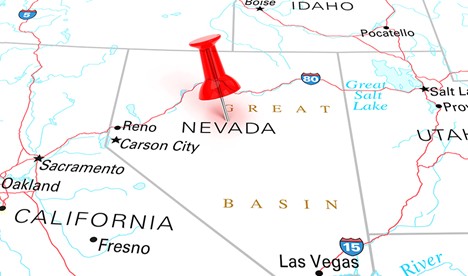
- Nevada is bordered by California, Idaho, Utah, Oregon and Arizona.
- The capital of Nevada is Carson City.
- Nevada’s 2024 gross domestic product (GDP) was $269.01 billion. The main drivers of the state’s economy include tourism, technology, and hospitality.
EB-5 Investment: Your Gateway to Permanent Residency in the U.S., Including Nevada

With its booming job market, thriving economy, and bustling cities, the state of Nevada is a great place to live. Investing in the U.S. economy under the EB-5 program is an easy way for foreign nationals to gain permanent U.S. residency status.
Best of all, if you gain citizenship under the EB-5 program, you will be able to live, work and travel anywhere in the United States. Book a free consultation today to find out how EB5AN can help you achieve this.
