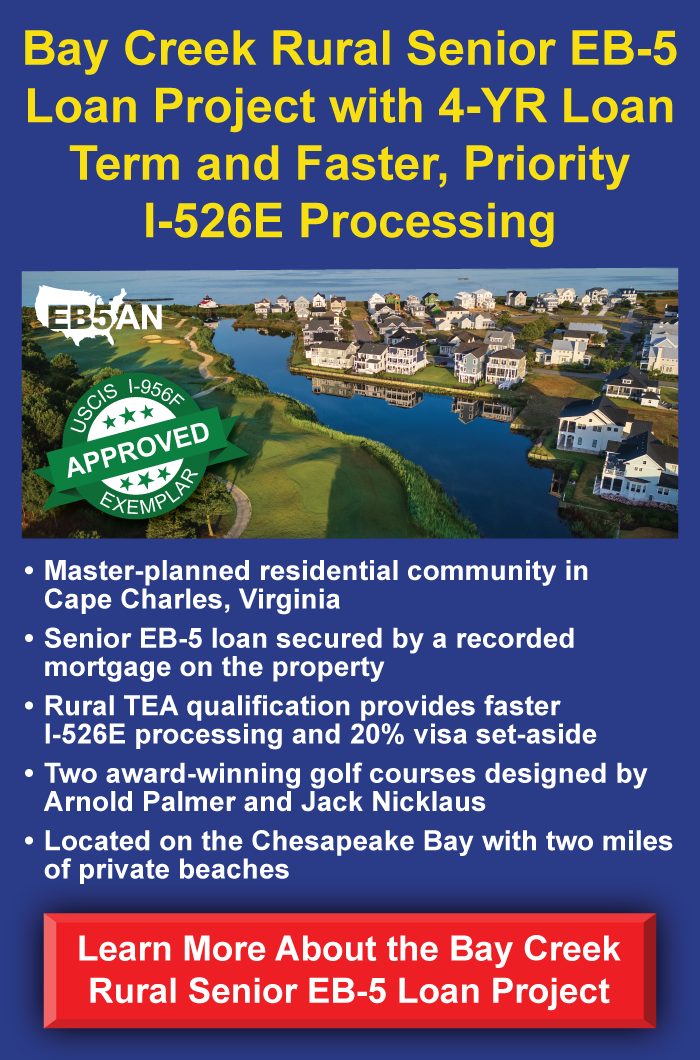

If you are interested in investing in a rural EB-5 project, you’ll have to choose between a wide variety of rural offerings currently on the market. Rural projects offer clear immigration advantages—including priority USCIS processing—but those benefits only matter if the underlying project is financially strong, well-structured, and grounded in real demand. The rural category has grown rapidly in the last few years, and investors now face a wide range of options. Some are supported by proven developers and real market data. Others are not. A rural designation alone does not guarantee immigration success or repayment, and the differences between projects can be substantial.
For investors trying to make a responsible choice, it helps to understand the specific criteria that matter: the strength of the capital stack, the developer’s track record, the project’s current construction status, the job-creation buffer, and the economic logic of the location. These factors are even more important in rural areas, where the local market has to justify long-term demand without relying on population density. When evaluated carefully, these details reveal which rural projects are positioned to deliver both immigration benefits and a realistic path to return of capital.
This is why learning directly from other EB-5 investors is so valuable. Experienced investors can explain how they approached due diligence, what risks they prioritized, and why certain rural offerings stood out as safer and more credible. Their interviews provide practical, candid insights that are difficult to get from marketing materials alone. New investors often tell us that hearing real decision-making logic—from people who went through the process successfully—helped them build a clear strategy of their own.
EB5AN’s testimonial library now includes more than twenty full-length interviews with investors from around the world. No other EB-5 firm has documented this much unfiltered investor experience or made it available publicly. These conversations highlight the questions investors should ask, the warning signs they noticed in weaker projects, and the specific reasons they ultimately chose EB5AN’s well-structured rural EB-5 offerings.
This post is the fifth installment in our new series revisiting some of the most compelling interviews in our archive. Each installment focuses on a major aspect of the EB-5 investment process. Today’s focus is on what to keep in mind when selecting a rural EB-5 project. Across the interviews featured below, investors share the criteria that shaped their decisions and the lessons they believe every new investor should hear before committing funds.
We also invite you to watch these highlights in the following compilation video featuring our investors’ key responses.
Watch All EB-5 Investor Testimonials
Project Type and Market Logic
Developer Track Record
Capital Structure and Loan Position
Project Progress, Sales Velocity, and Real-Time Evidence
Job Creation
EB5AN’s Transparency, Responsiveness, and Due Diligence Support
Get Green Cards in Months, Not Years, Through Rural EB-5 Projects
Project Type and Market Logic
“There are plethora of rural projects—you can read through it—like hotel construction and housing and whatnot. We normally were leaning towards a housing project, because it’s more straightforward. People need house, and there is demographic which is changing.”
“So why Rocky River? It’s a combination of … One is solid economic fundamentals. For those of you aren’t familiar, they have this Cresswind brand of properties, which really catered to active, old communities. I really liked them, building housing for that targeted segment. People need housing, and then this is targeted towards a particular segment. The economic fundamentals and the target audience they’re tracking towards.”
“And a couple of other things which stood out. The third was really about the developer. If you really think about it, they’ve done this format a couple of times, so this is a proven and tested format. So you’re trying to rinse and repeat the formula with a strong brand, Kolter. I didn’t really go through that track record, so it’s really a strong developer. Those are the three things why the Rocky River stood out in particular.”
—Deepak
Deepak, who invested in Rocky River, explained that he began by comparing the types of rural projects on the market and quickly saw that housing made more sense for his goals. He viewed residential demand as steady and easier to understand than discretionary categories like resorts. For him, this helped narrow the options and focus only on rural projects where buyer demand came from long-term demographic shifts rather than tourism cycles.
“I did really look into across the board construction project, like the luxury resort, the portal construction across different regional center. Again, in my own opinion. It’s more of what kind of things you really want to invest in. Some of those projects might be high ROI, but also, it’s more cyclical, if you really take a step back and look into it. The travel is more discretionary, and there are ups and downs, ebbs and flows. And housing normally tend to weather the storm, because end of the day, people need a place to live.”
—Deepak
That comparison shaped how Deepak evaluated risk. He noted that resort or hospitality projects can rise and fall with discretionary spending, which can drop sharply in a downturn. Housing, by contrast, is tied to ongoing need. This guided him toward rural communities in the Southeast where the 55+ population continues to grow every year.
“Hotels versus what kind of projects are you considering? Well, a handful. Primarily, again, all these being construction projects, we had to start getting into the nuances of what kind of projects these are, what’s a repayment, do they have a path to a positive cash flow at some point.”
“I think from a cash flow standpoint, I was also considering the seasonality and the popularity of these destinations. Some of these resorts that we were looking at are typically ski resorts. Again, for these rural projects we were looking at ski resorts, hotels, things like that. So we were assessing in general the visitorship of those locations and all that stuff. So in general, I thought that there’s some seasonality component to it. Also, resorts and hotels by nature kind of fall in the discretionary spending category. If another market downturn were to happen in the long run, I would want to be protected in the sense that discretionary spending and travel gets cut off the first. That’s what we saw in COVID, same thing as what we saw in 2008.”
—Niharika & Ishaan
Niharika and Ishaan, who invested in Rocky River, reached similar conclusions when reviewing ski and hotel projects. They paid attention to seasonality, occupancy patterns, and how cash flow would behave during slow periods.
They felt that housing was more stable and less exposed to visitor counts. This made rural residential communities more attractive for both job creation and repayment.
“There’s two key points there. The first is the way the projects are built and sold. So some of the other more commercial rural projects is where you put in all of this money and then you expect to sell the project to recoup that money. The key difference between those projects and Rocky River is that they’re only going to build, say, the first hundred houses. They will sell those houses, assess how the market is doing, and then build the next tranche.”
“So that kind of protects you as an EB-5 investor, that it’s not that they’re going to sit on a thousand houses and then wait for them to sell. They’re only going to build as much as they think they can sell in the upcoming time. So that kind of hedges a little bit of the risk versus the other commercial real estate, which is you have to build the entire resort to put it on the market for rentals. So I think that was one of the major differences that I found.”
—Niharika & Ishaan
Further, Niharika pointed to phased construction as a major advantage. She liked that the developer would build an initial segment, sell those homes, and only then begin the next stage. This kept inventory tied to proven demand and reduced exposure to overbuilding, which was one reason she and Ishaan preferred housing over hospitality.
Developer Track Record
“And a couple of other things which stood out. The third was really about the developer. If you really think about it, they’ve done this format a couple of times, so this is a proven and tested format. So you’re trying to rinse and repeat the formula with a strong brand, Kolter.”
—Deepak
Deepak also emphasized that the developer behind the project mattered as much as the project type itself. He liked that Kolter had already built similar communities and refined the same model across multiple sites. Seeing a “rinse and repeat” pattern gave him confidence that the execution risk was lower.
“To my mind, the single most important factor that matters in a real estate development like this is the track record of the developer. If they have a successful track record of doing this in the past and not once, but multiple times, that gives me great comfort that they know what they’re doing and they’re going to repeat the track record. Kolter Homes has a long track record in the Southeast of developing residential real estate like the Twin Lakes projects. Given that track record, I felt that they would be an excellent source of investment and would produce the results I was looking for. That’s the number one.”
—Ken
Ken, who invested in Twin Lakes, said the developer’s track record was the single most important factor in his choice. He looked closely at Kolter’s history and saw a long list of completed residential communities across the Southeast. Because Kolter had already delivered these projects many times, Ken felt they knew exactly how to build, sell, and manage a large rural development.
“The main reasons [for investing in Twin Lakes]: (1), Kolter is experienced, knowledgeable, a long track record, in this type of project; (2) the demographics of the project growth in the Southeast, in the 55+ market; (3) the fact that much of the infrastructure is in place, the common areas, many hundreds of homes built, over 500 homes approximately already sold. All of those things gave us a lot of comfort that this project will actually go through to completion and be successful.”
—James
James, who invested in Twin Lakes, added that this track record aligned with strong demographics. Kolter’s 25-plus years of building 55+ housing matched the migration trends he observed in the region. With thousands of similar homes already delivered by the same developer, he felt confident the Twin Lakes rural project would continue the pattern.
Capital Structure and Loan Position
“Is this a loan or an equity investment? That became a big consideration. And then, also in terms of loans, there are different kinds of loans. So we kind of had to educate ourselves on which one again has a better position in the capital stack. So that was one of the criteria.”
“Yeah, so we came up with a whole metric to rank each of the projects in our regional centers to select which project we wanted to go with. One of the top things that we considered was it needs to be a 956F-approved project … enough job cushion … and then picking a project which was rural and the capital stock which ranked in the senior loan capital stock.”
—Niharika and Ishaan
For Niharika and Ishaan, the structure of the investment itself was central. They compared equity to loan models and then evaluated the loan’s seniority in the capital stack. They preferred higher-priority loan structures because the position was more protective of the EB-5 investors in the project. This helped them narrow down their rural options quickly.
“One was definitely because we’re part of the loan fund, that the loan repayment guaranty was great. That was definitely a pivotal point in our decision as well.”
—Ayushi
“Right. And even for the loan repayment guaranty, the financials were very crystal clear. The transparency was maintained by both regional center as well as Kolter as a development group, because we had a lot of questions about repayment guaranty and they were satisfied not just with the emails but with the attachments of financials, as well as you mentioned about the balance sheets and whatnot. So that gives us a lot of confidence.”
—Kaushal
Kaushal and Ayushi, who invested in Twin Lakes, looked closely at repayment guaranties and the financial strength behind them. They reviewed the balance sheets, supporting documents, and all materials tied to the guaranty. The clarity of those documents influenced their decision. They appreciated that both EB5AN and Kolter answered detailed financial questions and provided all the attachments they needed.
“It was very important to review the project’s financial statements. And I think anyone looking to invest in this should also keep that as a very important criteria, to make sure that you’re reviewing all the documents possible. If you see anything missing in terms of financial documentation, make sure to ask the regional center.”
“And as I said, some regional centers didn’t have that documentation on hand, and they weren’t able to provide it. So that was a big differentiator, because EB5AN always got back to me with any of the documentation that I asked.”
—Kumar
Kumar, who invested in Rocky River, made documentation a major part of his process. He asked every regional center for full financial statements and noted clear differences between them. Some could not provide what he requested. EB5AN and Kolter, by contrast, returned every document he asked for. This responsiveness helped him understand the capital structure and how funds moved through the project.
“The project has all of its financing in place. There’s a great senior lender in place. The EB-5 is actually a relatively small part of the overall capital stack, which is, I think, a benefit.” —James
James also paid attention to how much of the capital stack was already secured. He preferred that EB-5 made up a smaller portion of the financing. Seeing a major senior lender in place and substantial developer equity made him feel that the project was financially grounded before EB-5 investors entered.
Project Progress, Sales Velocity, and Real-Time Evidence
“And also the progress of the project that we saw over that period of six to ten months showed us that the project was coming to fruition pretty quickly. We saw people living there, using the amenities, etc.”
—Ayushi
“Second, adding to that, it’s not just houses being built, houses being sold. So that newsletter with the updates that ‘You know what? This month we sold more, 13, 14, 15 houses.’ So that gave us more confidence.”
—Kaushal
Ayushi said that real-time progress was a turning point in her decision. She saw completed homes, finished amenities, and residents already living in the community. That visibility reduced her uncertainty and demonstrated that the project was well into construction.
Kaushal noted that Twin Lakes’ monthly sales reports confirmed demand. Seeing that 13–15 homes were selling each month showed him that buyers existed, financing was supported by real sales, and the project was moving at a healthy pace.
“The fact that much of the infrastructure is in place, the common areas, many hundreds of homes built, over 500 homes approximately already sold…” —James
James also focused on progress indicators. He saw that roads, utilities, and common areas were already built. With hundreds of homes sold, he felt the project had passed the riskiest phase and was functioning as an active community.
Job Creation
“And then the third point was that the jobs were already created by the time we invested, which gave us the confidence in the project itself.” —Ayushi
Ayushi said that job creation status was one of the most important factors in her final decision. When she saw that many jobs had already been created, she felt the immigration outcome was far more predictable.
“Job creation is already in place. And whatever happens with the project, after our investment, we should be receiving the conditional Green Cards… we should be able to already satisfy the job creation requirements.” —James
James echoed this. Knowing that job creation was already in place gave him confidence that his I-829 filing would be straightforward and result in a permanent U.S. Green Card. This made it easier to evaluate the remaining financial factors.
EB5AN’s Transparency, Responsiveness, and Due Diligence Support
“For people applying with this who don’t have a finance background, it’s important that they go through these documents and try to understand how the money will flow … And you will have questions. If you don’t have a finance background, you will have questions, and you need someone on hand from the regional center who will be able to answer your questions… And yeah, that was a differentiator.” —Kumar
Kumar emphasized that he needed clear answers in order to understand the financial structure. He did not have a finance background, so being able to ask questions and receive complete documents was essential. This helped him compare rural projects and see which teams were organized and prepared.
Several investors said that the way a regional center handled questions made a major difference. Kumar noticed when a regional center avoided details or failed to provide documents, and this shaped his judgment on which projects were safe.
“Right. And even for the loan repayment guaranty, the financials were very crystal clear. The transparency was maintained by both regional center as well as Kolter.”
—Kaushal
Kaushal and Ayushi said that transparency from EB5AN helped them understand the project’s health and repayment strategy. Clear communication and quick responses stood out when comparing rural EB-5 offerings across the market.
Get Green Cards in Months, Not Years, Through Rural EB-5 Projects
Across all of these interviews, the consistent thread is how methodical these investors were in evaluating rural projects. They compared developers, reviewed financials, checked construction progress, and confirmed job creation before making any decision. Their experiences show that a strong rural project is one you can verify through careful research.
As EB5AN’s managing partner Sam Silverman points out, “A rural project is only as strong as the facts you can verify. If you can clearly see the developer’s track record, the demand for the product, and the financial logic behind the capital stack, you’re already ahead of most of the market.”
We invite you to get free expert guidance for planning your EB-5 journey. Schedule a free consultation with EB5AN to find the best project to suit your needs.