
When it comes to EB-5 investing in 2026, one question keeps coming up among potential investors: should I choose a rural project or an urban one? On the surface, both paths lead to the same destination: a U.S. Green Card for the investor, spouse, and children. But beneath that surface, the journey, timelines, risks, and strategic considerations can look very different depending on which route you take.
Over the past few years, the EB-5 landscape has shifted significantly. Legislative changes, program reforms, and evolving market dynamics have created a scenario where rural and urban investments offer distinct advantages and trade-offs. Understanding these differences is essential for making a strategic decision that aligns with both immigration goals and investment objectives.
The Current EB-5 Landscape
Why Rural Projects Are Gaining Momentum
Urban Projects Mean Potentially Longer Timelines
Timing and Strategic Considerations
How to Approach Your Decision
The Current EB-5 Landscape
First, a quick snapshot of the environment in 2026. After the EB-5 Reform and Integrity Act of 2022 (RIA), the program has become more structured, transparent, and focused on compliance. One of the major impacts of the reform has been the creation of reserved visa allocations and priority processing for rural projects.
Urban projects, often concentrated in large cities, remain popular for investors seeking familiar markets and established infrastructure, but they face different processing dynamics, especially in terms of waiting times.
Why Rural Projects Are Gaining Momentum

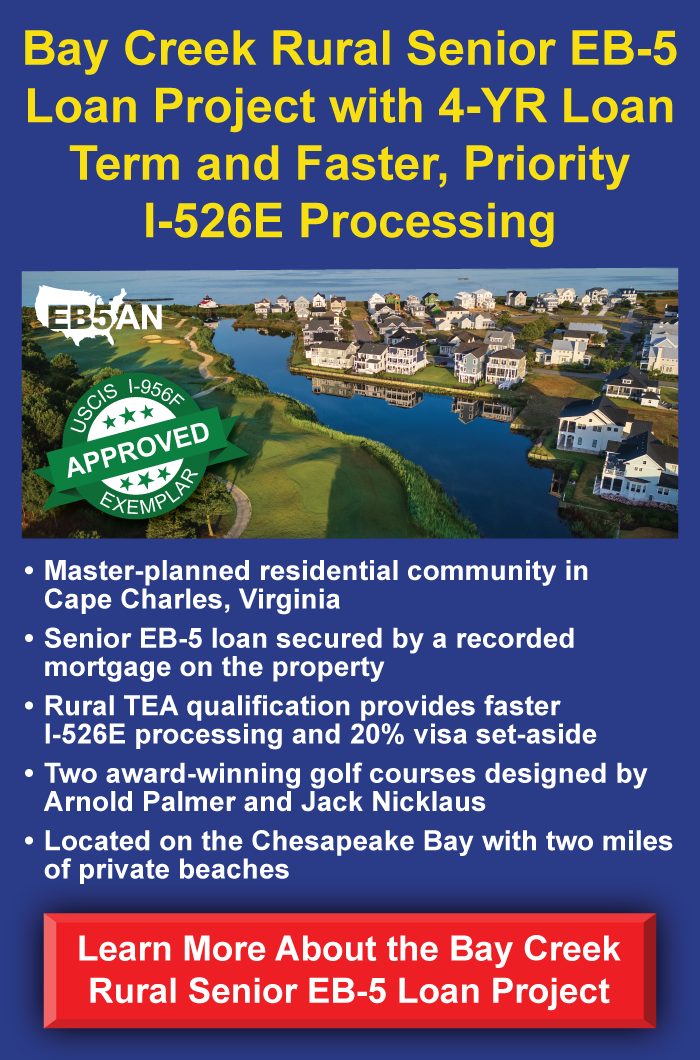
Rural EB-5 projects have become increasingly attractive for one simple reason: speed. Under the current framework, rural projects receive priority processing. That means the U.S. Citizenship and Immigration Services adjudicates these petitions ahead of others.
In practical terms, this translates to faster approvals. Many investors in rural projects are now seeing decisions on their I-526E petitions in less than a year, sometimes just a few months. When combined with the fact that set-aside visas remain current, meaning there is no retrogression delaying visa availability, the rural pathway offers a predictable, streamlined timeline.
This dedicated allocation of set-aside visas also reduces competition, making it easier for investors from high-demand countries to secure a visa number. With faster adjudication and a larger reserved visa pool, rural projects are becoming the preferred route for those prioritizing efficiency and speed in the immigration timeline.
Urban Projects Mean Potentially Longer Timelines
Urban EB-5 projects, on the other hand, offer a different set of advantages. These projects are often located in major metropolitan areas with established infrastructure, large populations, and ongoing development activity. For many investors, urban projects can feel more familiar and accessible, particularly when they are located in cities where investors already have personal or business connections.
However, urban projects can involve a more complex immigration timeline. Urban or “high-unemployment TEA” projects fall within the set-aside visa category, however, unlike rural projects, urban projects do not benefit from priority processing, which can result in longer and less predictable adjudication timelines.
While urban projects may offer the appeal of established markets and large-scale developments, the overall timeline is generally less predictable than rural alternatives due to the absence of priority processing.
Timing and Strategic Considerations
For investors who place a premium on speed and predictability, rural projects are hard to beat in 2026. That said, timing is not the only factor to consider. Urban projects may align better with certain investor preferences, particularly for those who feel more comfortable evaluating projects in well-known metropolitan markets with established infrastructure and development history.
Ultimately, the “best” strategy depends on balancing speed, risk, and personal priorities. If securing a U.S. Green Card as quickly as possible is the primary goal, rural EB-5 projects are the clear frontrunner. If familiarity with the market and comfort with the project type are more important, some investors may prefer urban projects despite the potentially longer and less predictable timeline.
How to Approach Your Decision

When evaluating rural versus urban EB-5 opportunities, it is important to take a structured approach. Investors should begin with the immigration timeline, assessing how quickly each option can realistically lead to petition approval and visa availability.
Next, consider the investment itself. Review the developer’s track record, the project’s financial structure, and its ability to create the required jobs. These factors are essential to both immigration success and capital preservation.
As of early 2026, rural EB-5 projects continue to attract strong investor interest. Demand is increasing, and more projects are being developed to meet rural eligibility requirements. Current processing trends indicate that this advantage is likely to continue in the near term, although conditions may evolve as policies, demand, and legislative priorities shift.
Urban projects, while generally associated with longer timelines, remain a viable option for investors who prioritize established markets and familiarity with project types.
In evaluating your EB-5 strategy this year, it is important to consider how timing, risk, and personal priorities align. A clear understanding of both rural and urban options allows investors to make informed decisions and approach the EB-5 process with confidence.
More than 2,700 families from over 70 countries have selected EB-5 projects sponsored by EB5AN regional centers. Our expert team has more than a decade of experience and offers clients first-rate, low-risk EB-5 regional center projects with a 100% USCIS project approval rate.
If you would like to know more about your EB-5 investment options, book a free call with our expert team today.