

The EB-5 Immigrant Investor Program allows investors to include their dependent family members on their EB-5 petition. However, each dependent family member must file a separate Green Card application.
You can apply for an EB-5 Green Card as a dependent through adjustment of status or consular processing, depending on your location at the time of filing. Aside from the EB-5 investment and Form I-526E application stages, the process of obtaining an EB-5 Green Card as a dependent is similar to that of the principal investor.
This article discusses the EB-5 process for dependent family members, including the advantages and limitations of an EB-5 dependent status.
Who Qualifies as a Dependent Family Member for EB-5?
When Should You File for an EB-5 Green Card as a Dependent Family Member?
What You Can Do on an EB-5 Visa as a Dependent Family Member
Limitations of an EB-5 Dependent Status
Timeline for Processing an EB-5 Green Card as a Dependent Family Member
- Timeline for Adjustment of Status as a Dependent
- Timeline for EB-5 Consular Processing as a Dependent
Best Practices for Navigating the EB-5 Process as a Dependent
EB5AN Can Help You Become an EB-5 Green Card Holder
What You Can Do on an EB-5 Visa as a Dependent Family Member
Limitations of an EB-5 Dependent Status
Timeline for Processing an EB-5 Green Card as a Dependent Family Member
- Timeline for Adjustment of Status as a Dependent
- Timeline for EB-5 Consular Processing as a Dependent
Best Practices for Navigating the EB-5 Process as a Dependent
EB5AN Can Help You Become an EB-5 Green Card Holder
Timeline for Processing an EB-5 Green Card as a Dependent Family Member
- Timeline for Adjustment of Status as a Dependent
- Timeline for EB-5 Consular Processing as a Dependent
Best Practices for Navigating the EB-5 Process as a Dependent
EB5AN Can Help You Become an EB-5 Green Card Holder
EB5AN Can Help You Become an EB-5 Green Card Holder
Who Qualifies as a Dependent Family Member for EB-5?

Under the EB-5 program, only an EB-5 investor’s legal spouse and unmarried children below 21 qualify as dependents. You are eligible for a dependent EB-5 visa if your spouse makes an EB-5 investment, provided your marriage is legally recognized in your home country or the country where it was contracted.
You also qualify as an EB-5 dependent if you’re under 21 and unmarried and one of your parents makes an EB-5 investment. If you’re an adopted child of an EB-5 investor, you also qualify as a dependent child, provided you were legally adopted, are under 21, and are unmarried.
You do not qualify as an EB-5 dependent if you are:
- A civil, common law, or unmarried partner of an EB-5 investor.
- A former spouse of an EB-5 investor.
- An EB-5 investor’s child over 21 years old, whether married or unmarried.
- An EB-5 investor’s child below 21 years old but married.
- A parent of an EB-5 principal applicant.
- A sibling or other relative of an EB-5 primary petitioner.
When Should You File for an EB-5 Green Card as a Dependent Family Member?
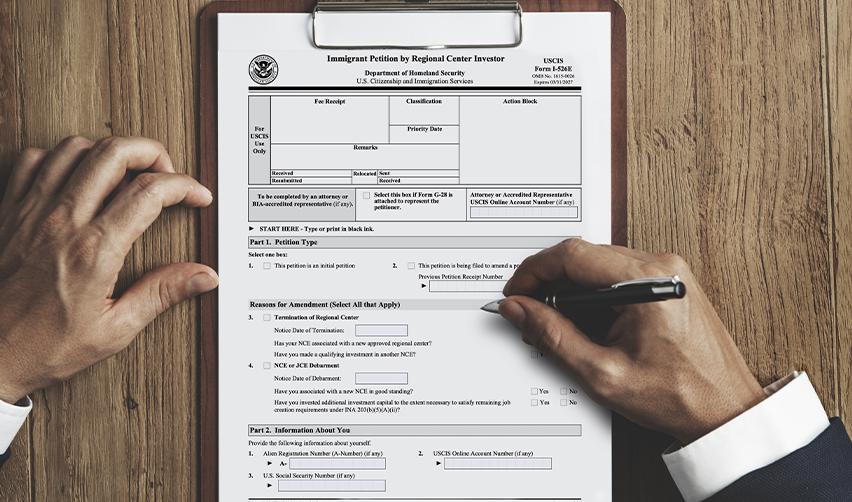
Dependent family members should ideally file their EB-5 Green Card applications at the same time as the principal investor. Crucially, though, the application process depends on whether you’re applying through adjustment of status or consular processing.
If you and the principal applicant are already in the U.S. on non-immigrant routes, such as H-1B or F-1 student visas, you’ll apply for your Green Card through adjustment of status. You may also be eligible for concurrent filing, which means you can submit your adjustment of status application simultaneously with your spouse or parent’s I-526E and I-485 petitions—as opposed to waiting until their Form I-526E is approved.
If you are applying from abroad to join a principal applicant already in the U.S. or you’re both applying from your home country, you’ll go through consular processing. Notably, concurrent filing is not available for EB-5 consular processing. You’ll have to wait until your spouse or parent receives their Form I-526E approval before you can apply for an EB-5 visa by filing a Form DS-260.
What You Can Do on an EB-5 Visa as a Dependent Family Member
An EB-5 dependent status gives you the same benefits and opportunities available to Green Card holders. These benefits allow you to do the following:
- Work: A dependent EB-5 Green Card grants you the freedom to work for any employer in the U.S., with the exception of some federal or governmental positions. You can also run a business or do freelance work. If you apply through adjustment of status, you can also concurrently file for employment authorization documentation, which allows you to work even before your Green Card is ready.
- Study: As an EB-5 dependent, you can study in any school in the U.S., provided you meet the institution’s entry requirements. Critically, you won’t be subject to international admission quotas, increasing your chances of admission into top schools. You can also qualify for reduced in-state tuition and access a broader range of education funding.
- Travel: An EB-5 dependent status allows you to travel freely in and out of the U.S. If you’re applying through adjustment of status, you can concurrently file for advance parole, allowing you to travel easily even before receiving your EB-5 Green Card.
- Apply to become a U.S. citizen: Your two-year conditional residence as an EB-5 dependent counts toward qualifying for U.S. citizenship. You can apply for U.S. citizenship by naturalization after five years of residing in the U.S. with your EB-5 Green Card.
Limitations of an EB-5 Dependent Status
The primary limitation of an EB-5 dependent status is that it is tied to the principal investor’s continued eligibility. If the principal EB-5 investor loses their permanent resident status for any reason, it may affect your ability to retain your status, depending on where you are in the EB-5 process.
If your spouse or parent’s Form I-526E is denied, you’ll lose your status along with them, even if you’ve already received employment and travel authorizations. You’ll also lose your status if they abandon the EB-5 process before receiving Form I-526E approval.
You may lose your status if the principal investor dies or abandons their EB-5 Green Card during their two-year conditional residence, depending on the situation surrounding your case. However, once your Form I-829 is approved and you receive your permanent Green Card, your status will no longer rely on the principal investor. In other words, you will not lose your status depending on what happens to your spouse or parent.
Another limitation of EB-5 status for dependent children is the risk of ‘aging out.’ While the Child Status Protection Act (CSPA) can help freeze a dependent’s age at the time of the principal applicant’s I-526E filing, delays in visa availability can still cause a child to age out upon turning 21 if the priority date does not become current in time.
This limitation primarily affects dependents of Chinese- and Indian-born investors in the unreserved category with heavy backlogs—so if you aren’t from either of these countries, this likely won’t happen to you. Also, if new investors choose EB-5 set-aside categories where visas are currently available, aging out may not be an issue, even for Chinese or Indian dependents.
Timeline for Processing an EB-5 Green Card as a Dependent Family Member

Depending on various factors, the processing of an EB-5 Green Card can take anywhere from a few months to several years. However, the timeline for processing an EB-5 dependent Green Card through adjustment of status is different from that of consular processing.
Timeline for Adjustment of Status as a Dependent
The timeline for processing an EB-5 dependent status through adjustment of status is as follows:
- Your spouse or parent makes a qualifying EB-5 investment.
- The principal applicant files a Form I-526E, including you as a dependent.
- If eligible, you concurrently file Form I-485 (including Forms I-765 and I-131 if necessary) at the same time as the primary applicant.
- You receive employment authorization documentation and advance parole if applicable.
- Your spouse or parent receives their Form I-526E approval.
- You attend an interview and biometric appointment if required.
- You receive your EB-5 Conditional Green Card.
- After two years, you file Form I-829 for removal of Green Card conditions.
- You obtain legal permanent resident status.
- You can apply for U.S. citizenship by naturalization after five years of residence.
Timeline for EB-5 Consular Processing as a Dependent
Applying for a dependent EB-5 visa through consular processing involves the following steps:
- Your spouse or parent (the principal investor) makes a qualifying EB-5 investment.
- The principal investor files a Form I-526E.
- The principal applicant receives Form I-526E approval.
- You file a Form DS-260 for an EB-5 visa with the principal investor and pay all required fees.
- You attend a consular interview and biometric appointment with the principal investor at the U.S. consular office in your locality.
- You submit all required documentation.
- You receive your dependent EB-5 visa and travel to the U.S.
- You receive your EB-5 conditional Green Card after arriving in the U.S.
- After two years, you file Form I-829 for removal of Green Card conditions.
- You obtain your legal permanent resident card (unconditional Green Card).
- You can apply for U.S. citizenship by naturalization after five years of residence.
Best Practices for Navigating the EB-5 Process as a Dependent
The following recommendations and best practices can help you successfully navigate the EB-5 process as a dependent.
- Apply for your EB-5 Green Card along with the principal investor. While you can file for your EB-5 Green Card after your principal has received theirs, the process to do so may be more demanding. It is much easier and straightforward to apply together with the principal investor.
- Be actively involved in the EB-5 process as a dependent spouse. You may be able to spot any potential red flags, errors, or omissions your spouse missed. This could come at any point in the EB-5 process—from selecting a project to filing application forms. Noticing and addressing any of these issues as early as possible will help streamline the EB-5 process and make your experience much smoother.
- Promptly inform your immigration attorney about any changes in the principal investor’s status that can affect your status. For example, if the principal investor dies before completing the EB-5 process, you should immediately notify your attorney. Depending on the stage you’re at in the process and your specific situation, they may be able to find a way to help you retain your legal status.
- Consult with an immigration lawyer before making life-changing decisions, such as getting a divorce if you’re a dependent spouse or getting married as a dependent child. This is important to ensure you remain eligible for the removal of your Green Card conditions.
EB5AN Can Help You Become an EB-5 Green Card Holder

The EB-5 program benefits families by allowing investors to include their dependent family members in their applications. The process of obtaining a Green Card is mostly the same for principal investors and dependent family members, which means that including dependents doesn’t overly complicate the EB-5 process.
If your family is considering pursuing U.S. legal permanent residency via the EB-5 program, EB5AN can help. In our 10+ years of experience, we’ve assisted over 2,300 families from 60+ nationalities in obtaining U.S. legal permanent resident status through the EB-5 program.
For more information about the EB-5 process for dependent family members, schedule a free one-on-one consultation with our EB-5 experts today.