
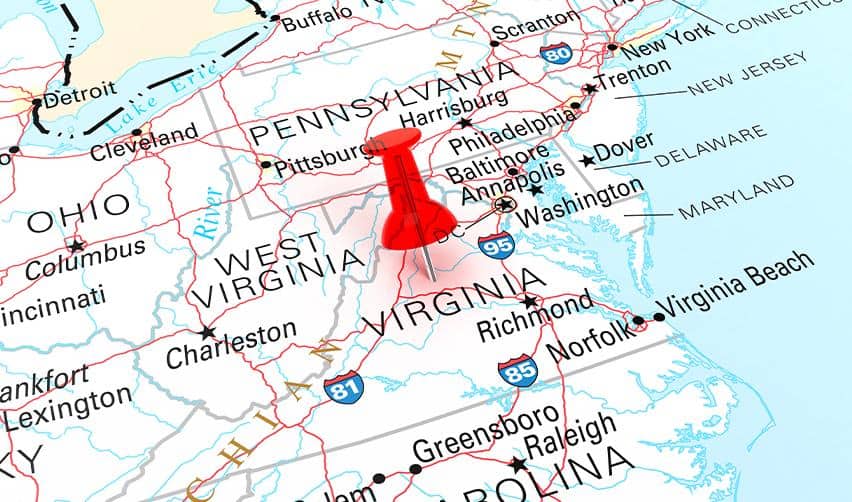
For EB-5 Immigrant Investor Program investors evaluating opportunities in the United States in 2026, geography is strategy. Where a project sits on the map can influence everything from economic resilience and demand stability to long-term exit scenarios and perceived immigration strength in the eyes of investors.
Virginia, in particular, has quietly emerged as one of the more structurally interesting EB-5 states. Not because it competes with gateway cities like New York or Los Angeles on scale, but because it sits in a uniquely powerful position: right next to Washington, D.C. That proximity carries more weight than it might initially seem.
The Washington, D.C. Effect
Virginia as a Spillover Market
Rural Virginia and the EB-5 Policy Shift
A Closer Look at the Simply Shenandoah EB-5 Project
The Investor Perspective in 2026
Where Location Meets Opportunity
The Washington, D.C. Effect
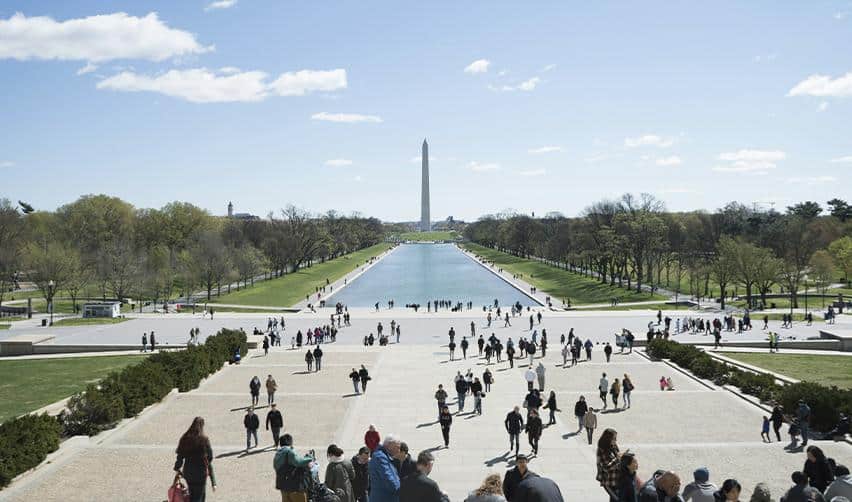
Washington, D.C. is not just the political capital of the United States. It is also one of the most stable economic engines in the country. Federal employment creates a baseline of demand that is unusually resistant to market cycles. Government contractors, regulatory agencies, international organizations, think tanks, and a growing professional services ecosystem all contribute to a steady, high-income population base.
For EB-5 projects in Northern Virginia and surrounding regions, this translates into a structural advantage: even when broader real estate or hospitality markets slow down, demand tied to government activity tends to remain steady.
This is especially relevant in 2026, as investors are increasingly sensitive to macro volatility. Inflation cycles, interest rate uncertainty, and global geopolitical instability have made “defensive geography” more important than ever in EB-5 decision-making. Proximity to Washington, D.C. essentially places Virginia projects inside one of the most defensive regional economies in the United States.
Virginia as a Spillover Market
Another important dynamic is spillover demand. Washington, D.C. itself is geographically constrained and highly regulated, which limits new large-scale development. As a result, growth doesn’t stop at the border. It flows outward into Northern Virginia counties such as Arlington, Fairfax, Loudoun, and further into the Shenandoah Valley and surrounding regions.
This spillover effect also influences hospitality, wellness tourism, corporate retreats, and mixed-use development.
Investors evaluating EB-5 projects in Virginia are often indirectly benefiting from D.C.’s pricing pressure and land scarcity. In practical terms, this can support stronger occupancy assumptions, higher room rates in hospitality projects, and more consistent utilization of large-scale developments than would be typical in isolated rural markets.
Rural Virginia and the EB-5 Policy Shift
Since the EB-5 Reform and Integrity Act was introduced in 2022, rural projects have gained a meaningful structural advantage: set-aside visa categories and priority processing.
By 2026, this distinction has become a central part of EB-5 strategy. Rural projects are now positioned as faster-processing pathways.
Virginia is somewhat unique here because it offers both worlds. You can find highly urbanized proximity to Washington, D.C., and you can also find federally designated rural areas within driving distance of the same economic hub.
This combination allows developers to structure projects that capture rural visa benefits while still tapping into the economic gravity of one of the strongest metropolitan regions in the country.
A Closer Look at the Simply Shenandoah EB-5 Project
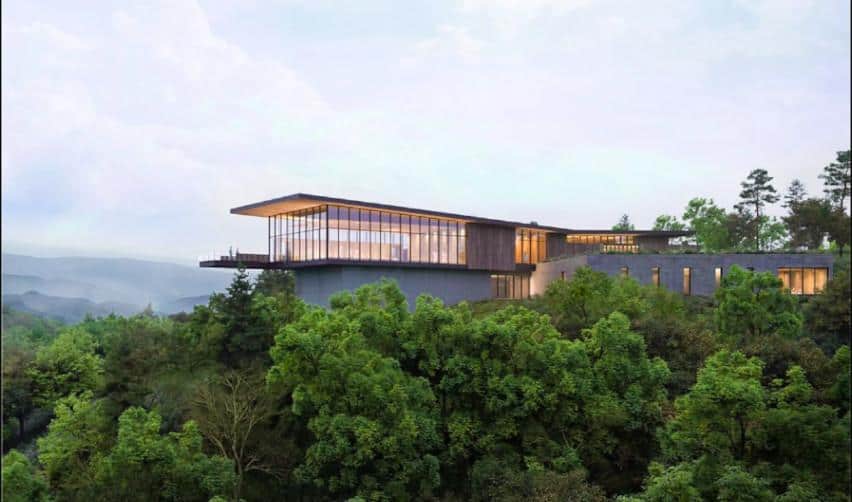
A useful example of this dynamic in practice is the Simply Shenandoah EB-5 project in Shenandoah County, Virginia.
Located roughly 90 minutes from Washington, D.C., the project sits in a region that is rural by classification but strategically positioned within the broader D.C. economic orbit. That balance is what makes it particularly relevant for EB-5 investors evaluating 2026 opportunities.
Simply Shenandoah is structured as a large-scale luxury wellness resort spanning approximately 548 acres. The development plan includes 120 guest rooms, spa and aquatics facilities, fitness and yoga amenities, event and meeting spaces, and full food and beverage operations.
One of the key features emphasized in its structure is job creation scale. Construction is already underway, and more than 100 qualifying EB-5 jobs have been created to date. The project is expected to generate more than 2,000 EB-5 qualifying jobs, significantly exceeding the minimum requirement per investor allocation. For EB-5 investors, that buffer reduces sensitivity to construction delays, operational ramp-up variability, or conservative economic modeling.
The capital structure also reflects a more modern EB-5 design approach. The EB-5 component is deployed through a senior loan structure secured by project assets, including real estate and broader collateral protections.
From an immigration standpoint, the project has also received USCIS Form I-956F exemplar approval, which means its underlying offering documents and structure have already been reviewed at the project level. While this does not guarantee individual petition outcomes, it does provide an additional layer of procedural predictability compared to unreviewed offerings.
For investors, this positioning may also carry longer-term implications for asset appreciation potential and exit liquidity scenarios on the underlying development.
The Investor Perspective in 2026
EB-5 investing today is increasingly about balancing three competing priorities: immigration certainty, capital protection, and realistic job creation execution.
Virginia’s proximity to Washington, D.C. helps address at least two of those concerns indirectly. It supports economic stability assumptions and strengthens demand narratives for hospitality and mixed-use developments. At the same time, rural-designated areas within Virginia allow investors to benefit from priority processing.
Where Location Meets Opportunity

For EB-5 investors looking at the United States in 2026, Virginia offers a nuanced proposition. It is not simply a “safe state” or a “growth state.” It is a structural bridge between two powerful forces: the stability of Washington, D.C. and the policy advantages of rural EB-5 designation.
Projects like Simply Shenandoah illustrate how this combination is being used in modern EB-5 structuring by blending geographic advantage with immigration efficiency and large-scale job creation modeling.
In a market where investors are increasingly careful about both immigration timelines and project fundamentals, that kind of positioning is difficult to ignore.
More than 3,000 families from over 70 countries have selected EB-5 projects sponsored by EB5AN regional centers. Our expert team has more than a decade of experience and offers clients high-quality, low-risk EB-5 regional center projects with a 100% USCIS project approval rate.
If you would like to know more about your EB-5 investment options, book a free call with our expert team today.