

Choosing an EB-5 project means planning for both your Green Card and the return of your investment. The latest filing data can help you make a more informed immigration decision, particularly if you were born in China or India.
Rural projects are attracting more investor petitions than high unemployment projects, and rural priority processing is moving more of those investors toward the visa stage.
At the same time, this makes rural more likely to become the first reserved EB-5 category to face a visa backlog.
How can EB-5 investors—especially Chinese and Indian nationals—address this possibility?
For investors choosing a project now, an EB-5 project that qualifies as both a rural and a high unemployment targeted employment area (TEA) may be the best option. Dual TEA qualification may preserve another visa option if the rural category develops a cutoff date first.
Growing EB-5 demand has made this question more pressing as investors prepare for changes in filing costs and investment requirements. Our recent webinar with immigration attorney Ron Klasko examined how these developments could affect investors filing today, including how investors might use a project’s dual qualification later in the immigration process.
“An EB-5 investor should ask what happens after the I-526E is approved,” says Sam Silverman, managing partner of EB5AN. “If a visa backlog develops, a project that qualifies as both rural and high unemployment may give that investor another option. It’s worth discussing that possibility with your attorney before you choose a project.”
Below, we examine the filing numbers, what a rural backlog could mean for Chinese and Indian investors, and how dual TEA qualification may help. We also look at EB5AN’s current projects that qualify in both categories and the questions investors should work through with their immigration attorneys.
What the Latest EB-5 Filing Data Shows
Why Rural Is More Likely to Face a Visa Cutoff First
What a Rural Backlog Could Mean for Chinese and Indian Investors
How Dual Rural and High Unemployment Qualification May Help
EB5AN Projects That Qualify in Both Categories
Preparing Your EB-5 Investment Before a Backlog Develops
What the Latest EB-5 Filing Data Shows
USCIS’s quarterly figures and longer filing history both show strong rural demand. The figures below distinguish recent quarterly receipts from filings and decisions over a longer period.
USCIS’s FY2026 Q3 EB-5 data covers April 1 through June 30, 2026. USCIS received 1,599 regional center investor I-526E petitions and completed 904, a difference of 695 petitions. Pending I-526E inventory reached 11,192. The breakdown below includes those I-526E receipts plus 66 standalone I-526 receipts, for a total of 1,665 investor petitions.
| Investment classification | Q3 investor petitions | Share of total |
|---|---|---|
| Rural only | 748 | 44.9% |
| High unemployment only | 589 | 35.4% |
| Both rural and high unemployment | 182 | 10.9% |
| Other classifications | 146 | 8.8% |
| Total | 1,665 | 100.0% |
Including petitions classified in both categories, rural filings totaled 930, or 55.9% of quarterly receipts. India accounted for 645 new investor petitions across all classifications, narrowly ahead of China’s 615. Together, the two countries represented 75.7% of receipts.
In recent monthly data, rural investments accounted for about 60% of I-526E filings, up from approximately 25% to 30% in FY2023. In the post-RIA data through May 31, 2026, China and India accounted for about 73% of petitions. From January through May alone, Indian investors filed 560 rural petitions, close to the 645 filed by Chinese investors.
USCIS has processed the two categories at different rates. Among post-RIA petitions through May 31, 2026, approximately 44% of rural petitions remained undecided, compared with about 80% of high unemployment petitions. Rural priority processing helps explain why a larger share of rural investors has already passed the petition stage and can move toward applying for a visa.
The available figures don’t yet capture all the investor filings from later in 2026. The detailed filing data stops in May, and the quarterly figures stop in June. Neither captures the full summer filing period or subsequent filings ahead of the coming cost increases. Any estimate of future demand will need to include those later petitions.
Why Rural Is More Likely to Face a Visa Cutoff First

An approved I-526E petition brings an investor closer to a Green Card, but the investor and each accompanying family member also need an available visa number. The reserved EB-5 categories have separate allocations: rural receives 20% of annual EB-5 visas, high unemployment receives 10%, and infrastructure receives 2%.
On a roughly 10,000-visa annual baseline, rural’s share would be about 2,000 visas and high unemployment’s about 1,000. The number of available visas depends on the annual employment-based limit and unused visas carried forward under the applicable rules. Petition totals also understate potential visa demand because spouses and children need their own numbers. Estimating EB-5 visa availability requires more than a petition count to establish the length of a future wait.
Rural’s larger allocation is an advantage. Even so, strong filings and faster petition adjudication can bring more rural applicants to the visa stage sooner. High unemployment investors whose petitions remain pending haven’t yet reached that point. Together, these factors make the rural category more likely to develop a cutoff first, especially for China and India.
No rural cutoff has been announced. The November 2026 Visa Bulletin continues to list all three reserved categories as current for every country. How long the categories remain current will depend partly on the pace of USCIS approvals and how quickly approved investors complete the next stage.
A later cutoff in high unemployment would not necessarily mean a shorter total Green Card wait. An investor could spend longer waiting for a high unemployment I-526E approval while a rural investor receives approval sooner and then waits for a visa. High unemployment also has only half the rural category’s base allocation, so it has fewer visas available as approved cases move forward.
What a Rural Backlog Could Mean for Chinese and Indian Investors
Chinese investors account for a large share of post-RIA demand, and Indian rural filings have moved close to China’s in the recent data. Investors in both groups therefore face a greater risk of future country-specific cutoffs. Visa chargeability is generally based on birthplace, with exceptions that an attorney should review. Your current residence or a newly acquired citizenship usually won’t change that analysis. Country limits also affect visa availability.
If rural develops a cutoff for your country, your priority date must be earlier than the applicable Final Action Date before you can receive an immigrant visa or USCIS can approve your adjustment of status. That restriction still applies even if your I-526E petition is approved. The monthly Visa Bulletin sets out the dates that determine when final approval is possible.
For example, a Chinese investor could receive I-526E approval and still have to wait because the rural Final Action Date has not advanced beyond the investor’s priority date. Depending on demand and available visas, that additional wait could last months or years.
Investors already in the United States also need to understand the difference between being allowed to file an I-485 and being eligible for final approval. Filing an eligible adjustment of status application does not reserve a visa number for later approval, and a subsequent cutoff can delay completion. Check the USCIS adjustment filing charts with your attorney before planning a concurrent filing.
Filing a complete I-526E petition establishes your priority date and can put you ahead of later applicants if a queue develops. Chinese and Indian investors should therefore consider their category options before committing to a project and prepare the source-of-funds evidence early enough to avoid preventable filing delays.
How Dual Rural and High Unemployment Qualification May Help

An EB-5 project can satisfy the requirements for both a rural TEA and a high unemployment TEA. For example, our Hard Rock Pointe Vista project’s dual TEA qualification can expand an investor’s reserved visa options while retaining eligibility for rural priority processing.
Suppose an investor’s rural I-526E petition is approved, but rural visas are then backlogged for that investor’s country. If the project also qualifies as high unemployment and that category remains available, the investor may have a way to pursue a high unemployment visa using the same investment.
For Chinese and Indian investors concerned about a rural backlog, this is one of the most useful project features to discuss before investing. It may preserve an alternative that a rural-only project cannot offer.
Consular Processing Offers a Potential Route
An investor pursuing consular processing may select the applicable category at the National Visa Center stage after I-526E approval when the investment supports both qualifications. An attorney should confirm that the petition and project records support the requested category and coordinate that request before the case proceeds. The consular interview process still requires an available visa and compliance with the other immigration requirements.
This possibility is especially relevant to an investor living outside the United States. If rural becomes backlogged while high unemployment remains available, dual qualification may allow the investor to continue toward an immigrant visa without making a new investment in a different project. Whether this is possible will depend on how the agencies handle the individual case.
Concurrent Adjustment Cases Need Further Legal Review
The procedure is less clear for investors who file an I-485 concurrently with their I-526E petition. USCIS has not set out a dedicated procedure for switching between these two reserved categories in concurrent adjustment cases. Investors should not assume the National Visa Center approach will work in the same way for a pending adjustment application.
Dual qualification can still be a worthwhile feature for an investor planning to adjust status, but the attorney needs to assess how it could apply to that investor’s case. Before filing, ask what evidence is needed to establish both qualifications and what steps your attorney would consider if rural later develops a cutoff. If a child in your family is approaching age 21, your attorney should also review the Child Status Protection Act, since petition timing and visa availability can affect the child’s eligibility.
EB5AN Projects That Qualify in Both Categories
EB5AN’s current offerings include two developments with dual rural and high unemployment qualification: Hard Rock Pointe Vista and Lakeview Landing Phase 2. Lakeview Landing Phase 2 has separate loan and equity options. Investors should compare the financial terms of each offering alongside the immigration benefits.
Hard Rock Pointe Vista
Hard Rock Pointe Vista is a hotel and condominium development on Lake Texoma in southern Oklahoma, about 100 miles north of Dallas. The project includes a Hard Rock-branded hotel, 131 branded condominiums, and the Caribbean Bay recreation and dining amenity. Construction is underway, and USCIS has approved the project’s Form I-956F.
The EB-5 investment is structured as a five-year senior loan secured by mortgages and a 100% equity pledge. The project reports more than 510 qualifying jobs already created, enough for the first 51 EB-5 investors. Investors can review the construction progress and documented job creation alongside the security supporting the EB-5 loan.
Lakeview Landing Phase 2
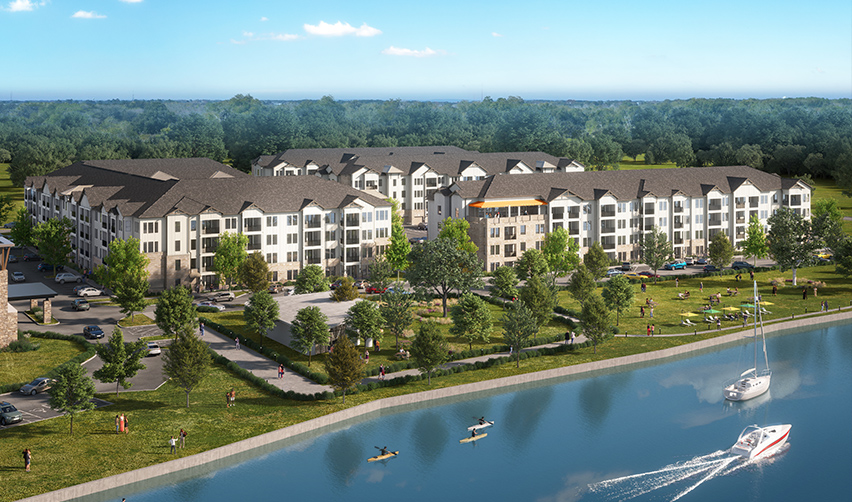
Lakeview Landing Phase 2’s loan offering supports a 208-unit rental apartment community in Granbury, Texas, within the same 48-acre mixed-use development as Phase 1. Realty Capital Residential is developing the community. The loan offering has a three-year term with one optional one-year extension and includes a construction completion guaranty.
Lakeview also offers a separate equity investment with a 4% annual preferred return, subject to the investment’s terms and financial performance.
Both offerings enjoy rural and high unemployment TEA qualification. Investors can compare the loan’s repayment terms with the equity offering’s distribution terms while considering the same development and potential visa category flexibility.
Preparing Your EB-5 Investment Before a Backlog Develops
The rural filing numbers give Chinese and Indian investors a reason to plan for a possible backlog now. A project that qualifies as both rural and high unemployment may offer a useful alternative if rural visas become unavailable first.
Review that possibility with your immigration attorney before investing, including how it would apply to consular processing or adjustment of status. Then examine the project’s financing and repayment prospects through careful EB-5 due diligence.
To discuss our current dual TEA projects and compare the available offerings, schedule a free consultation with EB5AN.