

Every EB-5 investor must prove that their investment created at least 10 full-time jobs for qualified U.S. workers. If the jobs are not there, the investment amount does not matter, the project’s quality does not matter, and the Green Card does not come. Yet many investors spend weeks analyzing a project’s financials and only minutes asking whether its sponsor has actually delivered jobs before.
This article explains how job creation is counted in regional center projects, what a genuine track record looks like, which documents to request, and the warning signs that should give any investor pause.
Why Job Creation Matters in an EB-5 Investment
How Regional Center Projects Count Jobs
What a Real Job Creation Track Record Looks Like
Key Documents to Request From a Regional Center
Red Flags in a Job Creation Track Record
Questions to Ask Before You Invest
Work With a Regional Center That Has Delivered
Why Job Creation Matters in an EB-5 Investment
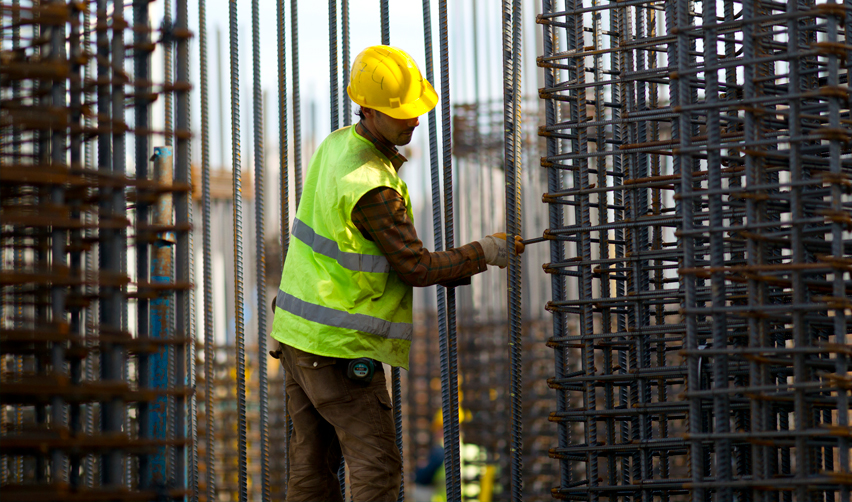
The EB-5 program exists to create American jobs. In exchange for an investment of $800,000 in a targeted employment area (TEA) project, or $1,050,000 elsewhere, and the creation of at least 10 full-time positions, a foreign investor and their immediate family can obtain U.S. permanent residency.
Job creation is tested at the final stage of the process. After an investor’s Form I-526E is approved and they have held conditional permanent residency for two years, they file Form I-829 to remove the conditions on their Green Card. At that point, United States Citizenship and Immigration Services (USCIS) examines whether the required jobs were actually created. An investor can do everything else correctly and still fail at the I-829 stage if the project falls short on jobs.
This is why a regional center’s job creation history deserves as much attention as any financial term in the offering documents. It is the single factor that most directly determines whether the immigration process succeeds.
How Regional Center Projects Count Jobs
Regional center investors have an important advantage over direct EB-5 investors: they can count indirect and induced jobs, not just employees on the project’s payroll. Direct jobs are positions at the new commercial enterprise or the job-creating entity itself. Indirect jobs arise in supplier and service businesses because of the project, and induced jobs come from workers spending their wages in the local economy.
These indirect and induced figures are calculated by economists using accepted input-output models, most commonly RIMS II (published by the U.S. Bureau of Economic Analysis) or IMPLAN. The models apply multipliers to verifiable inputs such as construction spending and operating revenue.
The EB-5 Reform and Integrity Act of 2022 (RIA) tightened the rules. Indirect and induced jobs can now satisfy no more than 90% of an investor’s job creation requirement, so at least one of each investor’s 10 jobs must be direct. If a project’s jobs come from construction activity lasting less than two years, the indirect cap drops to 75%. For construction lasting more than two years, direct construction jobs can be counted in full, which is one reason large, multi-year construction projects remain the backbone of regional center job creation.
For an investor, the practical takeaway is this: jobs tied to construction spending that has already occurred are far more certain than jobs that depend on the future revenue of a business that has not yet opened.
What a Real Job Creation Track Record Looks Like
A track record is not a projection. It is a history of completed projects where USCIS agreed that the jobs were created. When evaluating a regional center, look for evidence in three tiers, in ascending order of strength.
First, project approvals. Form I-956F approval means USCIS reviewed the project’s business plan and economic report and found the job creation methodology credible. This is a meaningful screen, but it validates the plan, not the outcome.
Second, I-526E approvals for investors in the sponsor’s past projects. These confirm that USCIS accepted the projects and the investors’ capital at the front end of the process.
Third, and most important, I-829 approvals. An I-829 approval is USCIS’s confirmation that the jobs were actually created and the investor’s conditions were removed. A regional center whose past investors have received I-829 approvals has proven, not promised, that its projects deliver jobs. Ask how many investors across how many projects have reached this stage.
Alongside adjudication history, examine the job creation buffer in past and current projects. A well-structured project projects substantially more jobs than its investors collectively need, so that even if costs shift or timelines change, every investor’s 10-job requirement is covered. A project that needs 500 jobs and projects 510 leaves no room for error. A project that projects 50% more jobs than required protects investors against ordinary real-world variance.
Key Documents to Request From a Regional Center
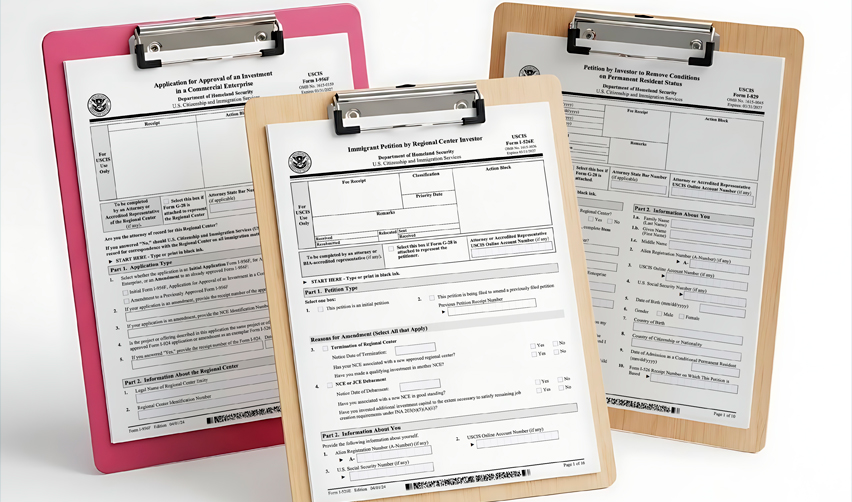
A sponsor with a genuine record will share it. Request the following before committing capital:
- The economic impact report for the project, identifying the economist, the model used, and the inputs behind the multipliers.
- The job creation calculation, showing total jobs required at full subscription, total jobs projected, and the resulting buffer.
- The breakdown between construction-based and operations-based jobs, and how much of the qualifying spending has already been incurred.
- The sponsor’s adjudication history, including I-956F approvals, I-526E approvals, and I-829 approvals across prior projects.
- The job allocation policy, explaining how jobs are assigned to individual investors and what happens if the project creates fewer jobs than projected.
The last item is often overlooked. In many projects, jobs are allocated to investors in the order they invested or filed. If a shortfall would leave later investors uncovered, you need to know where you would stand in that line.
Red Flags in a Job Creation Track Record
Certain patterns should prompt harder questions or a decision to walk away:
- Jobs that depend heavily on future operations. Projections built on the revenue of an unopened hotel, restaurant, or attraction carry real execution risk. Construction spending already in the ground is far more reliable.
- A thin or nonexistent buffer. If projected jobs barely exceed required jobs, any budget reduction puts investors’ petitions at risk.
- No completed projects. A sponsor that has never taken a project through I-829 adjudications is asking investors to be the test case.
- Unusually aggressive multipliers or vague inputs. If the economic report’s assumptions are not clearly tied to a detailed, third-party-verifiable budget, the job numbers are harder to rely on.
- Reluctance to share records. A sponsor with a strong record is usually glad to share its adjudication history and economic reports.
None of these automatically means a project will fail. Together, however, they describe the difference between a documented record and a marketing claim.
Questions to Ask Before You Invest
A short list of direct questions will reveal most of what you need to know:
- How many jobs does the project need at full subscription, and how many does the economic report project?
- What share of the projected jobs comes from construction spending that has already occurred?
- How many of your past investors have received I-829 approvals?
- Has any of your past projects created fewer jobs than its investors required? If so, what happened?
- How are jobs allocated among investors, and where would I fall in that allocation?
A credible regional center can answer all five quickly, in writing, with documentation.
Work With a Regional Center That Has Delivered
Job creation is where an EB-5 investment either fulfills its purpose or fails it. Projections, models, and multipliers all matter, but the decisive evidence is a history of projects that created the jobs they promised and investors who received their permanent Green Cards as a result.
More than 3,000 families from over 70 countries have selected EB-5 projects sponsored by EB5AN regional centers. Our expert team has more than a decade of experience and offers clients high-quality, low-risk EB-5 regional center projects with a 100% USCIS project approval rate.
If you would like to know more about your EB-5 investment options, book a free call with our expert team today.