

Most EB-5 investors invest through a regional center, and the sponsor they pick shapes both halves of the outcome: the Green Card and the return of their capital. There is no official ranking of regional centers, and marketing claims are easy to make. The best regional center for one family is the one whose record, structure, and projects hold up under careful review.
This post explains what a regional center does, which signals separate strong sponsors from weak ones, the warning signs to watch for, and the questions to ask before you commit. It also shows how EB5AN compares against those standards.
What an EB-5 Regional Center Does for Investors
Why USCIS Designation Alone Is Not Enough
Seven Signs of a Strong Regional Center
- 1. A Strong Project Approval Record
- 2. Investor Petition Results
- 3. A Documented Repayment History
- 4. Transparency and Full Documentation
- 5. Quality Projects and Proven Developers
- 6. Job Creation Cushions and Investor Protections
- 7. Experience Across Market Cycles
Red Flags When Comparing Regional Centers
Questions to Ask Any Regional Center
How EB5AN Measures Up
Choosing the Right Regional Center for Your Family
What an EB-5 Regional Center Does for Investors
A regional center is a USCIS-designated organization that sponsors EB-5 projects and pools capital from many investors. It structures each offering, prepares the project-level filing that USCIS reviews, oversees how investor funds are spent, tracks job creation, and reports to investors until their capital is returned.
Regional center investments can count indirect and induced jobs, which is why most investors choose this route over a direct investment in their own business. That flexibility also means the investor depends heavily on the sponsor’s competence. Your immigration case rests on documents the regional center prepares, and your repayment depends on projects it selects and monitors.
Why USCIS Designation Alone Is Not Enough
Every regional center must hold USCIS designation, so designation tells you very little about quality. It confirms the organization is allowed to sponsor projects. It does not mean USCIS endorses its projects or its finances.
The EB-5 Reform and Integrity Act of 2022 (RIA) raised the floor for all sponsors. Regional centers now pay an annual fee to the EB-5 Integrity Fund, which supports monitoring and fraud investigations. The law also added stricter recordkeeping, government audits and site visits, registration requirements for promoters, and the power to bar bad actors from the program. These rules apply to every sponsor equally, so they are a minimum standard to expect. To compare sponsors, you need to look at results.
Regional centers also depend on a program that Congress authorizes for set periods. The current authorization runs through September 30, 2027. An experienced sponsor should be able to explain how it has handled past program lapses and how it keeps investors informed about reauthorization.
Seven Signs of a Strong Regional Center
1. A Strong Project Approval Record
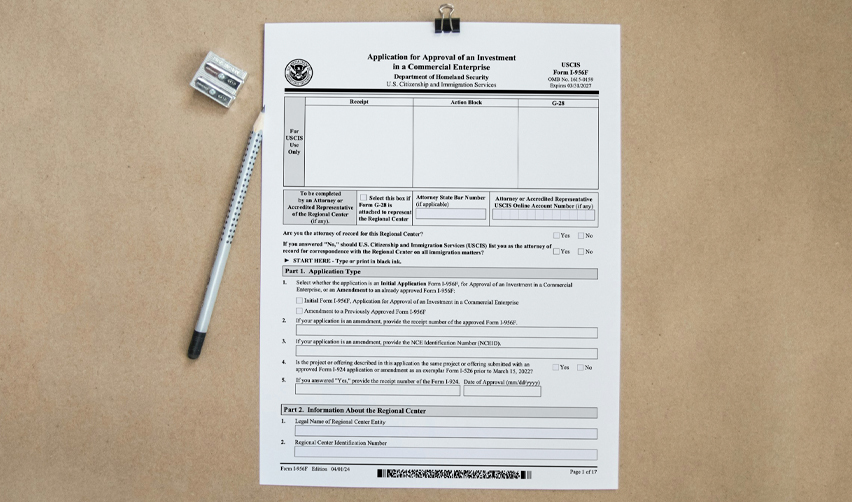
Each offering needs an approved Form I-956F before USCIS can finally decide the investor petitions tied to it. Ask how many I-956F filings the sponsor has made, how many were approved, and whether any were denied or withdrawn. A long record across different project types shows the team can prepare filings USCIS accepts.
2. Investor Petition Results
Project approval is only part of the picture. Ask how many investors in the sponsor’s projects have received Form I-526E approval, how long those approvals took, and how later-stage investors have fared when filing Form I-829 to remove conditions on their Green Cards.
3. A Documented Repayment History
Immigration success with a lost investment is a poor outcome. Ask which past projects have repaid investors, whether repayment was on schedule, and whether any third party has verified those figures. A sponsor that has operated for many years should have concrete examples.
4. Transparency and Full Documentation
A good sponsor gives you the private placement memorandum, business plan, economic impact report, loan or operating agreements, and financial statements without resistance. It should also explain fees plainly and send regular progress reports after you invest.
5. Quality Projects and Proven Developers
The regional center’s choice of projects matters as much as its paperwork. Look for experienced developers, approved entitlements and permits, construction already underway where possible, and a clear plan for repaying EB-5 capital. A sponsor that has worked with the same strong developers across many projects gives you a longer history to examine.
6. Job Creation Cushions and Investor Protections
Each investor must show at least 10 qualifying jobs. Strong offerings project well above the required number, so delays or budget changes do not threaten petitions. Look also for protections such as collateral, repayment guaranties, completion guaranties, and refunds if an I-526E petition is denied.
7. Experience Across Market Cycles
A regional center that has operated through program lapses, rule changes, and real estate cycles has been tested in ways a new sponsor has not. Longevity does not prove quality on its own. A long record does give you far more evidence to review.
Red Flags When Comparing Regional Centers

- Promised or “guaranteed” returns. EB-5 capital must remain at risk, so a sponsor that promises a fixed return or no risk raises a compliance problem.
- Reluctance to share documents. If a sponsor will not provide financial statements or the full offering memorandum, walk away.
- Vague answers about past results. Approval rates, petition outcomes, and repayments should be stated in specific numbers you can check.
- Thin job creation margins. A projection barely above the required total leaves little room for problems.
- Pressure to decide quickly. Deadlines in the EB-5 program are real, but a sponsor should never discourage you from careful review.
Questions to Ask Any Regional Center
- How many Form I-956F applications have you filed, and how many has USCIS approved?
- How many of your investors have received I-526E and I-829 approvals?
- Which of your past projects have repaid investors, and can you show evidence?
- How do you monitor the use of EB-5 funds and verify job creation during construction?
- What fees do investors pay, and who receives them?
- How often will I receive updates, and what will they include?
Compare the answers across sponsors in writing, and ask your independent immigration attorney to review them.
How EB5AN Measures Up
EB5AN was founded in 2013 and operates 15 USCIS-approved regional centers covering the continental United States. More than 3,000 families from over 70 countries have invested through its projects, as shown on its investor map. Here is how its record lines up with the signals above.
- Project approvals: EB5AN has received numerous Form I-956F approvals and reports a 100% USCIS project approval rate since 2013.
- Investor approvals: More than 800 EB5AN investors have received Form I-526E approval since 2022. In its rural projects, more than 80% of approvals arrived within 12 months, with an average of 9.6 months.
- Repayments: Baker Tilly, an independent accounting and advisory firm, performed procedures on repayment records for six past EB5AN projects developed by Kolter and documented $64.3 million in repayments. In October 2026, Kolter fully repaid the ONE St. Petersburg EB-5 loan months before its scheduled maturity.
- Scale and experience: EB5AN has managed more than 50 EB-5 investment funds that have deployed more than $1 billion into projects representing more than $8 billion in total development.
- Investor protections: Every offering in EB5AN’s current portfolio includes a job creation guaranty and an I-526E approval refund guaranty, and each projects more jobs than a fully subscribed offering requires.
EB5AN also provides offering documents and financial statements on request, which lets investors test these claims against the source material.
Choosing the Right Regional Center for Your Family
The best regional center for you is the one whose record you can verify and whose projects fit your goals. A rural project may suit an investor who values faster processing, while another investor may care more about the developer, the loan structure, or the investment term. Start with sponsors that can document approvals, petition outcomes, and repayments, then compare their projects in detail with your attorney.
More than 3,000 families from over 70 countries have selected EB-5 projects sponsored by EB5AN regional centers. Our expert team has more than a decade of experience and offers clients high-quality, low-risk EB-5 regional center projects with a 100% USCIS project approval rate.
If you would like to know more about your EB-5 investment options, book a free call with our expert team today.