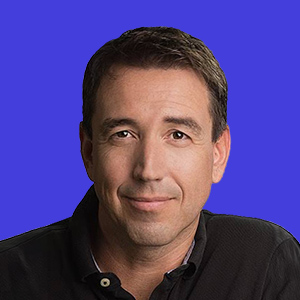
Select Highlights of the Interview with Kuba from Poland EB-5 Investor in the EB5AN Brandon Multifamily Equity Project
- “So based on that experience, because we still wanted to stay in the US, I researched other ways of obtaining a Green Card that is not tied to any whims of an employer and any maybe future waves of layoffs that may happen elsewhere in the industry. And that’s how EB-5 caught my eye as this is the path I want to pursue.”
- “When it comes to the Brandon Multifamily Equity Project, what attracted me is this was a new project; it has not started yet. It was still before breaking the ground; it was an early phase, so I would be an early investor, which was attractive to me. And it came with two flavors, equity and senior loan—if I remember correctly, the other option. And comparing between them, I decided on the equity because of the potential rate of return on the investment, like freezing this amount of money for this amount of time. I would expect a return and not just a way to just get EB-5 visa through it.”
- “Yeah, I would definitely recommend due to the level of professionalism, knowledge and experience. And it makes me sleep better knowing that I went with EB5AN.”
Full Interview with Kuba from Poland
EB-5 Investor in the EB5AN Brandon Multifamily Equity Project
Transcript of the Interview with Kuba from Poland
My Background and Why I Chose EB-5
Hi everyone. I'm Sam Silverman, managing partner of EB5AN. Thank you for taking time to join us for today's webinar. Today, we're going to be discussing the Brandon Multifamily Equity Project, one of our urban EB-5 projects with one of our recent EB-5 investors in the project, Kuba from Poland. So Kuba, thank you for taking a few minutes today to join us and share a little bit about your experience pursuing EB-5 and why you ultimately decided to go with the Brandon Multifamily Equity Project. So to start with, please tell us a little bit about yourself and what piqued your interest in exploring an EB-5 application earlier this year.
Yeah, sounds great. So I’m Polish-Canadian, originally from Poland and moved to Canada about 13 years ago. And after spending 11 years in Canada, me and my family, we decided maybe it’s time to move to US. And back then I was employed by one of the big corporations that has offices in US; I already worked for them in Canada. So it was actually easy to move on an L-1B visa. I’m a software engineer.
And as part of that move, right after I arrived in the US, I started my process for getting a green card through the employer, through the PERM process and EB-2 process.
So you're already pretty familiar with different visa categories and options. What about EB-5 in particular was just unique and just ended up being the best fit for the long-term decision for your family to be in the US as opposed to staying in Canada?
Yes. The EB-2 process for engineers like me is not quick and takes a few years getting the PERM approval and all of the steps. So what happens is my employer was going through layoffs and I got hit by a layoff—which essentially reset all of my green card progress and process and I would have to start completely from scratch.
So based on that experience, because we still wanted to stay in the US, I researched other ways of obtaining a green card that is not tied to any whims of an employer and any maybe future waves of layoffs that may happen elsewhere in the industry. And that’s how EB-5caught my eye as this is the path I want to pursue.
And about when was that, that you'd done some research and said, okay, EB-5 is going to be the right path forward to remain in the US long term? And once that kind of decision was made in your mind, what did you do next in terms of seeking out an attorney to help with your application?
Yeah, so I’m always pretty hands-on with all of the approval processes. So I knew EB-5 exists even as I was going through the EB-2 category. And when the layoffs happened, I immediately got moving and started researching—okay, I know I’m not going to go with an employer anymore. This is too risky. Started researching EB-5 a bit deeper, found references to EB5AN online, and you guys have a lot of reading materials I could consume and get familiar with the process, the type of visa and the steps.
And I actually scheduled a one-on-one session with one of your partners who provided me more details on what the process looks like, how the investment works, and so on. And shared a lot of the reading materials on the current ongoing investments. So again, I like to be data-driven and understand exactly what I’m getting into. So I read all of those materials, hundreds of pages.
My understanding and risk that goes with something like investing in real estate
Choosing an Immigration Attorney and Source of Funds Documentation
So before we really get into the project piece, tell us a little bit about the immigration attorney process. How did you go about finding an immigration attorney? How many people did you interview? Who'd you end up hiring and why? And how was your experience working with them on assembling all your financial records?
Yeah. So I started first looking for attorneys local to me so I can meet them face-to-face, but I didn’t really find anyone specializing in EB-5. And through EB5AN, I got a list of a few recommended attorneys that previously worked with EB5AN. And I started scheduling calls and doing the intro session to learn more about like telling them more about my situation and learning what they can do. I did about three interviews, and then I made up my mind on who is it going to be that got my confidence in understanding my situation, which is unique for everyone. And having the knowledge and experience to get us through all this.
And once you had decided on the attorney, tell us a little bit about what that experience was like. How long did it take? Was it as you expected in terms of the scope of all the documents that were needed? Yeah, just how was that experience once you had decided which person was going to be the right attorney?
Yeah, so since I was already pursuing an EB-2 path, I already had most of my documents that I needed assembled. There’s a special drawer in my house where I keep this kind of info, so it was easy to just collect and send over. What’s unique for EB-5 is documenting the source of funds. And in my particular situation, it wasn’t too complex just because of the investment coming from RSU vests from my own employer. So there wasn’t a tricky path for the source of funds to document. It was easily accessible online. I could get all of the documents pretty quickly.
So once you hired the attorney, how long roughly did it take before all those source of funds documents were all ready to go and you were ready to select a specific project?
I think it was about three weeks. Now, in my particular case, I did not immediately start pursuing EB-5. As a Canadian citizen, for my unique situation, I decided that I’m going to find a new employer first, get a TN visa because it’s very easy and quick to get for Canadians. And once I’m employed and under the new status of a TN visa, then I will proceed with starting on the EB-5 to get a green card that is not connected to my employer.
So having gone through that process with the immigration attorney, what are some tips and suggestions you'd have for somebody looking at EB-5 and in terms of picking an attorney? What are the things that you looked for in terms of giving you confidence on who's the best person to help me with this application?
So my approach is I do my own research and reading and understanding. So when I meet with an attorney, I already have a bunch of questions for clarification: do I understand this correctly? How does this apply to my unique situation? And based on those responses and the path that the attorney proposes, I make my judgment call: is that person truly understanding where I am and what I need and knows what the next steps are or not? And that was the basis for my decision.
Why I Chose EB5AN and the Brandon Multifamily Equity Project
All right, so moving on from the immigration attorney. So tell us a little bit about your process and approach specifically for regional centers. Obviously, you went into the Brandon Multifamily Project. But before we get to the project, at the regional center level, what were some things that were important to you? And how did your process look in terms of speaking with multiple regional centers and interacting with different companies?
Yes, so I mostly did my research online. And the way I approach it is how much information and how deep does it go on the websites immediately available to me? That’s the first thing that I can learn more. The second is kind of an adversarial research. Are there any articles online that talk negatively about the specific investment center? Have people been burned in the past? And based on that research, I was like the EB5AN, I didn’t find really negative information about any of the projects ongoing. I’m really satisfied with the information provided online and through the one-on-one contact, so this is the place I’m going to choose.
And how did that differ across other companies that you were talking with? What did you find that you were like, "Ah, you know what? I don't want to do that other company because X, Y, Z." What did you find that made that unique?
So there’s an official list on a government website listing to those investment centers. And a lot of them are basically just landing pages with no information or completely outdated things that are shut down. Which is once you go through several of these, you kind of lack confidence. It’s like this is a good way to research it. So finding EB5AN was like, they know what they are doing. They have a YouTube channel with webinars discussing ongoing matters. You are basically up-to-date on what’s happening and how EB-5 should be approached by investors.
So once you've done that initial preliminary research and identifying an experienced company like EB5AN that's up-to-date with what's happening, has a proven structure for projects. Tell us a little bit about your approach in terms of just picking a project. Obviously there's rural projects, urban projects, loan projects, equity projects. Yeah, just what kind of approach did you have? And why did that lead you to the Brandon Multifamily Project and the equity option?
Yes. So I, again, spent a lot of time reading all of the deep details of the projects and assembling a summary on the side with the key data points for each of the projects. Which is, what’s the return on investment? What’s the term of investment? How much time is the money going into investment? Can I understand the risks going with a specific investment? Yeah, several criteria essentially noted on the side. And then doing elimination of I’m not going to go with this one because of X, I’m not going to go with that one because of Y.
When it comes to the Brandon Multifamily Equity Project, what attracted me is this was a new project; it has not started yet. It was still before breaking the ground; it was an early phase, so I would be an early investor, which was attractive to me. And it came with two flavors, equity and senior loan—if I remember correctly, the other option. And comparing between them, I decided on the equity because of the potential rate of return on the investment, like freezing this amount of money for this amount of time. I would expect a return and not just a way to just get EB-5 visa through it.
Tell us a little bit about just the project itself, multifamily, renting apartments in Florida and the developer, the Kolter Group. How did those things impact how the project appealed versus some of the other projects you looked at?
Yeah, so again, doing some adversarial research on the developer itself, any opinions or maybe failed projects in the past, like doing that research online, is it risky or not risky? And from what I could tell, the projects are successful. And the complaints I could find online is something I would kind of expect for any type of real estate investment, like someone didn’t like something, but nothing really major. So I was like, this is a developer that has a lot of experience of doing these types of projects. And any negative feedback I can find is not really relevant to my investment approach here.
And in terms of the market, what did you think about just apartments in Florida? There's a lot of different projects obviously, right? Hotel in New York, condos in Denver, apartments in Florida. How did you think through, I'm more comfortable with my money being in Florida in apartments versus a hotel in Los Angeles, let's say?
Yeah, I think that I’m not an expert on real estate, so this is the way I thought about this is there’s a trend of some big cities having empty real estate through over-investment into apartments, and that’s definitely the case in downtown Nashville near where I live. But having apartment complexes in better locations than just plain downtown where there’s huge density already, I think that’s still a good place to put your money in. Population is still growing; we get more people; everyone is looking for apartments. So I don’t think this would be a problem in terms of this investment.
And in terms of ... I'm sure you did research on a rural project versus an urban project. What made you decide I'm interested in urban and that's a better fit for me compared to some of the rural options that EB5AN had and that were also in the market from other operators? What was your thought process for that?
For me, that consideration was secondary. So I was born in Poland, we do not have really any backlog of visas. So between the two types, I was like, I don’t need a separate set-aside to go through the EB-5 faster. So between urban and rural, it was the same to me essentially.
In terms of job creation, how did you think about job creation when selecting a project? What was the criteria you were looking for for that?
Yeah, so this definitely went into my comparison sheet looking at those different investments that are currently ongoing. I don’t remember specifically how it ended up for Brandon Multifamily compared to the other projects. But I was definitely okay with what I saw in the summary and prospect of what’s predicted and how does it compare to the number of investments and needs for the job creation. I definitely appreciated how all of the projects from EB5AN, they make a specific point in bringing that up. Like this is how many investors we expect; this is how many jobs created they will need; and this is how much we design into the project itself, into the investment and what’s the safety margin that we have.
And I'm sure you saw that Brandon Multifamily is the third Kolter multifamily project that we've done. Previously, the Boynton Beach project and Terra Ceia. So yeah, how did that factor into your decision to go with this project versus something else?
Again, just increasing confidence, right? Investment is always a risk and I’m not a normal real estate investor. So anything that gives me more confidence is always a plus.
All right, so moving away a little bit from the project itself, tell us a little bit about your interaction with the EB5AN team. Obviously, I know you mentioned you spent a bit of time on the website and also on the YouTube channel. But yeah, just summarize what your interactions were like with the team and what went well and what information were you able to get and how did that information exchange compare with some of the other companies that you were considering?
So the partner I talked to brought a lot of knowledge and experience. And as usual, I came with a list of questions, some of them really deep. And I got all of the answers in the call. It wasn’t like, “Let me get back to you.” It was always like, “Okay, these are the numbers, these are the facts, this is what happened,” which is, again, another de-risking and confidence-building exercise that the person you talk to knows a lot, if not all, about the ongoing and past projects. And they can tell in much detail of what happened and where are we at.
And I'm sure just as a software engineer, given your background, I'm sure you've had a lot of experience this year with artificial intelligence, ChatGPT, Claude, all of that. In your process, evaluating potential projects and regional centers, how did you leverage, utilize AI tools to help put together summaries or information to help make the best decision you could?
Yeah, so for something as important as this, I’m too much detail-oriented to use AI. I just looked at the source documents, I read them all. But that’s the kind of person I am.
Final Thoughts
All right, so your application's filed, everything's submitted, you're well ahead of the upcoming deadline. Having just gone through the whole process, selecting an attorney, researching the regional centers and projects, what kind of high-level advice would you have for someone who said, "Hey, Kuba, I'm considering doing EB-5 in the next couple months?" What advice, what tips would you have for somebody in a similar type situation?
I would ask them to introspect what exactly they want to get and what risks do they see for themself and their investment and what concerns them—what would make them not sleep well. And basically do the researchand just uncover all of that so you can sleep peacefully essentially, right?
In terms of picking a project specifically, what did you think? I know you mentioned equity compared to the loan, what really drove your decision to go equity versus loan? And how would you explain it to another investor who's deciding between equity versus loan?
Yeah, the loan had … If I remember correctly, had way lower return on investment built into the project. So I saw it as a potentially safer path to get to an EB-5 visa with the drawback that essentially with the inflation ongoing and so on, you end up losing the value of the investment money. You get an EB-5 visa out of that. But during the same time, if you would invest the same amount of money into S&P 500, you would get more out of that financially without a green card.
And now the senior loan has a priority and preference in term … In case anything goes wrong with an investment. And these people get paid out with a higher priority than the equity investors, right? So it comes with lower risk of potentially in any investment, things can go really wrong. You get lower risk of losing your investment entirely or a portion of it because you are top of the head of the queue in getting paid back.
For me, after reviewing the developer and the details of the project and the history of the developer, I consider that the risk of project failing is likely very low. And because of that, I’m willing to go in an equity investment where I get a higher return. But if something really goes wrong, I’m like, I will be later receiving the investment money back at a lower rate.
So if I understood that correctly, you basically thought, okay, I'm getting a higher rate of return, but I'm taking on a little bit more risk. So I need to look at, okay, what are the odds that the project doesn't do as well as I thought. And then compare that ... And basically just see, am I being compensated fairly for the risk for equity versus the loan? And compare those two returns. The return for the loan and the return for equity and say, "Okay, equity return is 10 times more than the return for the loan, but is the equity 10 times riskier?"
Exactly. And then the money that goes into investment essentially becomes your retirement savings. That’s why you call it save money after all, right? And saving for retirement is really sensitive to the rate of return of the early years. So by not having this money invested into something like S&P 500, which is the simplest—or something like you would invest in something with a low rate of return, years down the line, this has actually significant impact on the overall money saved for retirement.
So basically from your perspective, looking at Kolter's track record and building, executing projects, you thought, okay, the equity's a little bit more risk—but I'm being well compensated for that risk with a higher return. And it's the same project, just a preference order of capital repayment and that is a good bet, essentially.
All right. So just to wrap up, would you recommend your EB-5 attorney and EB5AN to other potential investors considering EB-5? And why? What are the couple of things that just really stand out in your mind of, yeah, here's why I would recommend and these are the main points?
All right. So just to wrap up, would you recommend your EB-5 attorney and EB5AN to other potential investors considering EB-5? And why? What are the couple of things that just really stand out in your mind of, yeah, here's why I would recommend and these are the main points?
Yeah, I would definitely recommend due to the level of professionalism, knowledge and experience. And it makes me sleep better knowing that I went with EB5AN.