

EB5AN is pleased to announce improvements to two of our premier EB-5 projects: Currahee Club and Hard Rock Pointe Vista. These changes strengthen investor protections and expand immigration options, supporting investors’ goals of recovering their capital and obtaining U.S. Green Cards.
EB5AN has strengthened investor protections at the Currahee Club rural EB-5 project by prohibiting its project companies from distributing profits to their owners while EB-5 loan principal remains outstanding. The change keeps value within the companies supporting the senior EB-5 loan, helping preserve assets available for repayment.
Separately, Hard Rock Pointe Vista now qualifies as both a rural and a high unemployment targeted employment area (TEA). Investors retain the benefits of rural priority processing while gaining access to a second reserved visa category. That additional option could help investors obtain their U.S. Green Cards sooner if one category becomes backlogged.
EB5AN recently held a webinar to explain these developments. Managing Partner Sam Silverman was joined by Senior Vice President Ahmed Khan, an experienced EB-5 immigration attorney and regional center executive with nearly 15 years in the industry.
We invite you to watch the webinar below or continue reading to learn how these changes benefit investors in two of the leading projects in the EB-5 market today.
Currahee Club Strengthens Protections for Investor Repayment
Hard Rock Pointe Vista Expands Investors’ Immigration Options
What Comes Next for EB-5 Investors in September 2026
Review Available EB-5 Projects as the Deadlines Approach
Currahee Club Strengthens Protections for Investor Repayment
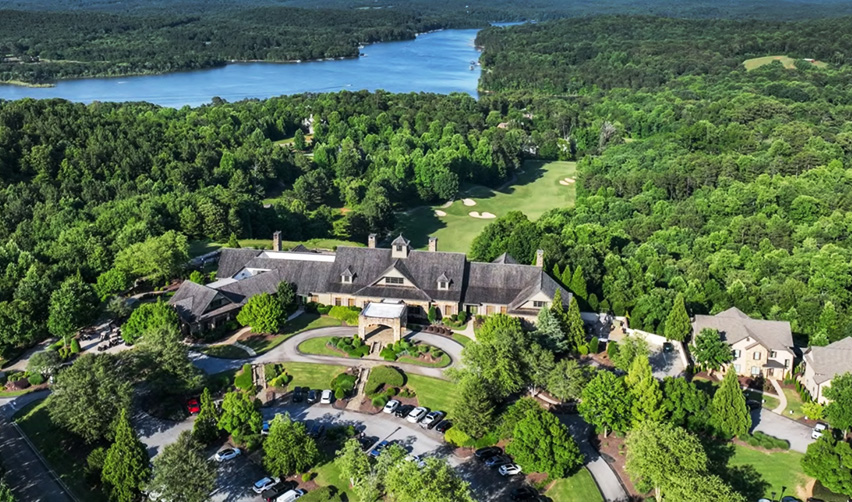
Currahee Club is an established residential community in Toccoa, Georgia, where development continues alongside existing homes and operating amenities. USCIS has approved the project’s Form I-956F application, and EB-5 capital supports further development through a senior secured loan. As homes are built and sold, the project generates cash for continued construction and eventual loan repayment.
Set across approximately 1,087 acres, the community combines residential lots, homes, condominiums, and duplex townhomes with recreational amenities, including an 18-hole golf course designed by Jim Fazio, dining facilities, and lake access. Troon Privé has been engaged to manage portions of the development.
Investors receive individual four-year loan terms, secured by a first-priority security deed on portions of the property and two pledges covering 100% of membership interests. The offering also includes job creation and I-526E approval refund guaranties.
Currahee Club offers rural priority processing and access to the rural reserved visa category at the current $800,000 minimum investment. Its projected job allocation is 18.8 jobs per investor, nearly double the 10-job requirement. These immigration benefits complement the project’s financial protections.
Sales alone do not determine whether a project can repay its lenders; the loan terms also matter. If an owner can withdraw profits throughout construction, cash may leave even a successful development before the EB-5 loan comes due.
The new distribution restriction addresses that risk. While principal remains outstanding under a project company’s secured promissory note, that company may not make distributions to its owner. This preserves value within the company during the loan term and gives the EB-5 lender an additional contractual protection.
How the Restriction Works
Three project companies hold Currahee Club’s developable land, club and amenity operations, and utility assets. The restriction operates at the individual company level, based on the EB-5 principal outstanding under each company’s note. It also covers equity redemptions and repurchases that could otherwise remove value from the company.
For example, after a home is sold, retained proceeds can remain as cash or be reinvested in further development. If those proceeds fund another home, the resulting assets and sale proceeds remain subject to the same restriction on owner distributions while the relevant secured promissory note remains outstanding.
This arrangement helps keep the owner’s financial interests aligned with repayment of EB-5 principal. An owner cannot take distributions from a company until it has repaid the principal outstanding under its secured promissory note.
Written Into the Loan Documents
The restriction appears in the amended secured promissory notes and is described in a supplement to the private placement memorandum (PPM). Investors can therefore review the contractual terms governing distributions, alongside the collateral and other protections supporting the loan.
For an EB-5 investor assessing repayment risk, this is a meaningful addition to the senior loan structure. It helps prevent value from being withdrawn through owner distributions before repayment, although the investment’s outcome still depends on project performance.
Hard Rock Pointe Vista Expands Investors’ Immigration Options

Hard Rock Pointe Vista is under development on Lake Texoma in southern Oklahoma, approximately 100 miles north of Dallas. The project includes a Hard Rock-branded hotel and condominiums, along with the Caribbean Bay beach and entertainment amenity. Its EB-5 offering uses a senior secured loan structure, and USCIS has already approved the project’s Form I-956F application.
Plans include 217 hotel rooms and 131 branded condominiums across seven buildings. Caribbean Bay will occupy 10.3 acres, with white-sand beaches, water activities, dining, and a floating stage for concerts.
Construction and job creation are underway. The developer group has already spent more than $38 million on the project, and over 480 qualifying EB-5 jobs have been created, enough to meet the requirement for the first 48 investors. The offering also provides construction completion, job creation, and I-526E approval refund guaranties, in addition to the loan’s mortgages and 100% equity pledge.
Each investor receives an individual five-year loan term. The construction completion guaranty makes the developer contractually responsible for finishing the components financed with EB-5 capital.
The project’s new high unemployment TEA qualification adds another immigration benefit to its existing rural designation.
Access to Two Reserved Visa Categories
The EB-5 Reform and Integrity Act of 2022 established separate reserved visa categories for EB-5 investors. Rural projects provide access to a category receiving 20% of annual EB-5 visas, while high unemployment TEA projects qualify for a separate 10% allocation.
Because these categories have separate visa allocations, their waiting times can differ. If demand exceeds the available supply in one category, investors eligible for another category may still have a visa available.
Hard Rock Pointe Vista’s dual qualification gives investors access to both categories. This flexibility could be particularly valuable for investors from China and India, where demand for EB-5 immigration is especially high.
For instance, suppose the rural category becomes backlogged for an investor’s country while the high unemployment category remains available. In that case, an eligible EB-5 investor in Hard Rock Pointe Vista may be able to use the high unemployment category to complete the immigration process. This depends on actual visa availability and the investor’s eligibility under that category.
Rural Priority Processing Remains an Advantage
Priority processing and visa availability affect different stages of the immigration process. Rural priority processing applies to USCIS adjudication of Form I-526E. An approved petition establishes the investor’s eligibility, but a visa must also be available before the investor can receive conditional permanent residence.
Because Hard Rock Pointe Vista retains its rural qualification, investors keep priority processing at the I-526E stage and gain a second reserved visa option at the visa stage.
For investors adjusting status in the United States, this flexibility may also help when USCIS reviews Form I-485. If the rural category is backlogged but the high unemployment category is available, the investor’s immigration attorney can ask USCIS to consider the case under the available category, provided the investor qualifies.
Dual TEA status does not guarantee an immediate Green Card or eliminate the possibility of a backlog in both categories. But it gives EB-5 investors another potential route to an available visa if conditions change during their immigration process.
What Comes Next for EB-5 Investors in September 2026

EB-5 investors who are only beginning the process in mid-September 2026 may not be able to file before the September 30 deadline. Establishing the lawful source and path of investment funds can require several weeks of preparation, so a realistic filing schedule should begin with an attorney’s assessment of the work ahead.
For EB-5 investors unable to meet the grandfathering deadline, December 31, 2026, is the next important planning date, since the minimum investment amount is scheduled for an inflation adjustment on January 1, 2027. An increase from the current $800,000 TEA minimum to $900,000 or more could materially affect a family’s budget. Starting now gives investors more time to assemble the funds and documentation needed for a complete filing.
EB5AN remains optimistic that the EB-5 Regional Center Program will be extended beyond its September 2027 expiration, along with its grandfathering protections.
Review Available EB-5 Projects as the Deadlines Approach
Demand for EB-5 investments remains strong as the September 30, 2026, grandfathering deadline approaches. Currahee Club’s distribution restriction strengthens the protections supporting repayment, while Hard Rock Pointe Vista’s dual TEA qualification expands investors’ immigration options. To review either offering, contact EB5AN for a free consultation with our team.