

Yes. Proceeds from the sale of real estate are one of the most common and widely accepted sources of funds for an EB-5 investment. For many investors, particularly those from markets where property values have risen sharply over the past two decades, selling a home or investment property is the most practical way to raise the required capital.
Acceptance, however, comes with conditions. United States Citizenship and Immigration Services (USCIS) requires every EB-5 investor to prove that their capital came from a lawful source and to trace its full path into the investment. This post explains how real estate sale proceeds fit those requirements, which documents you will need, and where investors most often run into trouble.
What USCIS Requires From an EB-5 Source of Funds
Why Real Estate Sale Proceeds Work Well for EB-5
Documents You Will Need to Prove a Real Estate Sale
Proving the Property Was Purchased With Lawful Funds
Gifts, Inheritance, and Loans Secured by Property
Common Mistakes That Lead to Requests for Evidence
How Real Estate Proceeds Fit Into the Broader EB-5 Process
What USCIS Requires From an EB-5 Source of Funds
Every EB-5 petition must show two related things. The first is the source of funds: the lawful origin of the money, such as salary, business income, or the sale of an asset. The second is the path of funds: a documented trail showing how the money moved from that origin to the EB-5 investment, typically through bank statements, wire transfer records, currency exchange documents, and account-to-account confirmations.
These requirements were strengthened by the EB-5 Reform and Integrity Act of 2022 (RIA), which raised documentation and transparency standards across the program. Under current rules, the minimum investment is $800,000 for a project in a targeted employment area (TEA) or $1,050,000 for a project outside a TEA, and the capital must be placed at risk in a new commercial enterprise that meets the program’s job creation requirements. Whatever the source, every dollar of that amount must be traceable.
Why Real Estate Sale Proceeds Work Well for EB-5
Immigration attorneys often describe real estate proceeds as one of the cleanest sources of funds an investor can present. Property transactions generate a natural paper trail: purchase contracts, title records, tax filings, and closing statements all exist as a matter of course. That built-in documentation makes it easier to satisfy USCIS than sources that rely on informal records.
Real estate is also a practical fit for the size of the investment. A single property sale can often cover the full $800,000 TEA minimum, avoiding the complexity of combining several smaller sources. And because the funds arrive as a lump sum through a formal closing process, the path of funds is usually short and simple: from the buyer or escrow account to the investor’s bank account, then to the EB-5 project.
Documents You Will Need to Prove a Real Estate Sale
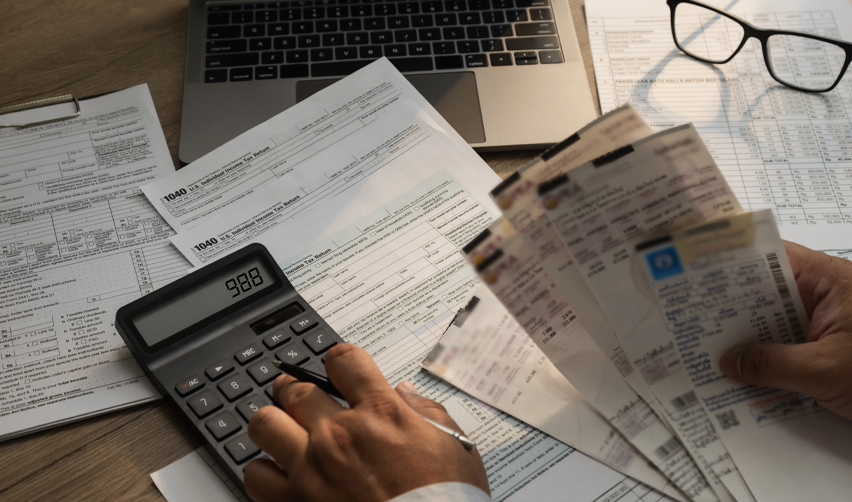
USCIS expects documentation covering the full life of the transaction, not just the sale itself. Based on the standards applied to these petitions, investors should plan to gather:
- The original purchase documents. The contract, invoice, or deed from when you acquired the property, along with proof of payment.
- Proof of ownership. Title records or an ownership certificate showing you held the property during the relevant period.
- The sale agreement. The signed contract with the buyer, showing the sale price and terms.
- The closing statement. A record of the net proceeds you actually received after fees, commissions, and any mortgage payoff.
- Bank records. Statements showing the proceeds arriving in your personal account, and every subsequent transfer toward the EB-5 investment.
- Tax records. Evidence that any capital gains taxes on the sale were paid, along with personal income tax returns, commonly for the past five years.
- Currency exchange records. If the property was located outside the United States, documentation of the conversion and international transfer of the proceeds.
If the sale was to a family member or another related party, an independent valuation is important to demonstrate that the transaction was priced at arm’s length.
Proving the Property Was Purchased With Lawful Funds
This is the step investors most often overlook. Showing that you sold a property legally is not enough on its own. USCIS also wants to confirm that the property was acquired through legal means in the first place, which means documenting the source of the money you originally used to buy it.
If you purchased the property with salary income, employment records and tax returns from that period will support the petition. If you bought it with proceeds from an earlier property sale, the chain extends further back. USCIS expects the chain traced to the original lawful source, so a sequence such as employment income funding Property A, the sale of Property A funding Property B, and the sale of Property B funding the EB-5 investment requires documentation of each transition.
For properties purchased decades ago, complete records may no longer exist. In those cases, experienced counsel can often build the record with alternative evidence, such as declarations from the petitioner and from people with direct knowledge of the original transaction, supported by whatever contemporaneous documents survive.
Gifts, Inheritance, and Loans Secured by Property

Real estate can also supply EB-5 capital indirectly, and each variation carries its own documentation burden.
Gifted proceeds from a family member’s property
Gifts are a lawful source of EB-5 funds, but the analysis shifts to the donor. If parents sell or mortgage real estate and gift the proceeds to the petitioner, the petition must include detailed documentation showing how the parents were able to purchase that real estate, along with records of the transfer itself.
Inherited property
Property received through inheritance and later sold can fund an EB-5 investment. The petition should include the death certificate, the will or estate documents, probate records, and evidence of the deceased’s own lawful source for the asset. The longer chain of title means more documents, not a weaker case.
Loans secured by real estate
You do not have to sell a property to use it. A loan secured by real estate, including a home equity line of credit, is an accepted source of EB-5 capital. Loans are permitted if they are lawfully obtained and properly documented, and the source of repayment must be clearly explained. You will still need to document the lawful acquisition of the underlying property.
Common Mistakes That Lead to Requests for Evidence
A few recurring errors cause delays and requests for evidence (RFEs) in petitions funded by real estate sales:
- Documenting only the sale. Skipping the original purchase records leaves the lawful-source question unanswered.
- Gaps in the money trail. Moving proceeds through multiple accounts, or through friends or relatives, without records for each step.
- Unexplained account activity. Large deposits or transactions in the relevant accounts that are inconsistent with the stated explanation of where the funds came from invite scrutiny.
- Missing tax evidence. Failing to show that taxes tied to the sale were paid, where applicable.
- Related-party sales without a valuation. Sales between family members at prices USCIS cannot verify as market rate.
Careful preparation with an experienced immigration attorney before filing is far cheaper than responding to an RFE afterward.
How Real Estate Proceeds Fit Into the Broader EB-5 Process

Once your proceeds are documented, they move into the standard EB-5 workflow. Regional center investors file Form I-526E with the full source and path of funds evidence attached.
Investors in TEA projects qualify at the $800,000 level and gain access to reserved visa categories: under the RIA, 20% of annual EB-5 visas are set aside for rural investments, 10% for high-unemployment areas, and 2% for infrastructure projects. Rural investors also benefit from priority processing of their petitions.
One timing note matters for anyone planning a property sale now: the RIA requires the investment thresholds to adjust for inflation every five years, with the first scheduled adjustment on January 1, 2027. Investors who complete their sale and file before an adjustment lock in the current amounts.
More than 3,000 families from over 70 countries have selected EB-5 projects sponsored by EB5AN regional centers. Our expert team has more than a decade of experience and offers clients high-quality, low-risk EB-5 regional center projects with a 100% USCIS project approval rate.
If you would like to know more about your EB-5 investment options, book a free call with our expert team today.