

AI tools like Claude can speed up EB-5 research, but they work best as a starting point, not a final answer. The right questions help you pull useful structure out of a project’s offering documents and check that structure against current immigration rules. The wrong approach treats whatever the model says as fact, including figures and dates that may be out of date or simply wrong.
Below are 10 questions worth asking Claude as you study an EB-5 project. Each one points you toward something you can then confirm with your immigration attorney and against primary sources. Treat the answers as a research draft you verify, not a decision you act on.
1. What Is the Project, and Who Is Behind It?
2. Is This a TEA Project, and Which Set-Aside Does It Use?
3. How Will the Project Create the Jobs I Need?
4. What Is the Minimum Investment, and Could It Change Before I File?
5. How Is My Capital Structured, Loan or Equity?
6. How Does the September 30, 2026 Deadline Affect Me?
7. Where Does My Country Stand in the Visa Bulletin?
8. Which Forms Apply, and What Are Current Processing Times?
9. Can I File for Adjustment of Status at the Same Time?
10. How Do I Verify Everything Claude Tells Me?
1. What Is the Project, and Who Is Behind It?
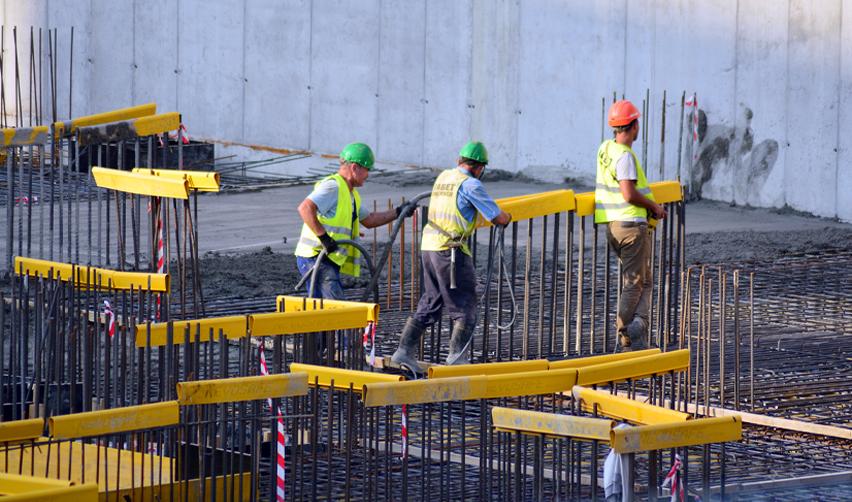
Start broad. Ask Claude to summarize what the project actually is: the type of business, where it is located, the developer, and the regional center sponsoring it. A clear, plain-language summary helps you spot gaps. If the model cannot describe the business model in concrete terms, that usually means the source material is thin or vague, which is information in itself.
Ask Claude to separate verified facts from assumptions. For a specific named project with limited public information, a careful answer will say what is documented and flag what is not. Anything the model presents as a precise figure, a unit count, a raise amount, or a completion date should be treated as unconfirmed until you see it in the offering documents.
2. Is This a TEA Project, and Which Set-Aside Does It Use?
Targeted employment area (TEA) status determines both your minimum investment and your access to reserved visas. Ask Claude to explain whether the project claims TEA status and which category it falls under: rural, high-unemployment (urban), or infrastructure. Then ask what evidence supports that designation.
The set-aside categories were created by the EB-5 Reform and Integrity Act of 2022 (RIA) and carry different annual visa allocations: 20 percent of EB-5 visas for rural projects, 10 percent for high-unemployment projects, and 2 percent for infrastructure projects. Rural projects also qualify for priority processing of the investor petition. Ask Claude to lay out these distinctions, then confirm the project’s actual designation with your attorney, because the label drives much of the timeline math that follows.
3. How Will the Project Create the Jobs I Need?
Every EB-5 investor must create or preserve at least 10 full-time jobs for qualifying US workers. Regional center investments can count indirect and induced jobs through approved economic models, while direct investments require direct payroll jobs. Ask Claude to walk through how this specific project plans to generate the jobs tied to your investment, and what the economic report relies on, such as construction spending or ongoing operations.
A useful follow-up: ask what happens to your case if the project creates fewer jobs than projected. The answer points you to the job-creation cushion, meaning the margin of jobs above the minimum, which is one of the more important diligence points in any project.
4. What Is the Minimum Investment, and Could It Change Before I File?

As of 2026, the minimum EB-5 investment is $800,000 for a project in a TEA, and $1,050,000 for a standard project outside any TEA. These amounts were set by the RIA.
Ask Claude what the minimum is for the specific project and why. Then ask about timing, because these thresholds adjust for inflation every five years, with the first adjustment expected on January 1, 2027. Treat any specific projected number as an estimate, not a fixed amount, and confirm the current threshold before you commit funds.
5. How Is My Capital Structured, Loan or Equity?
EB-5 capital is usually structured as either a loan to the project or an equity investment. The structure affects your risk, the expected timeline for return of capital, and how your money sits relative to other financing in the project. Ask Claude to explain how this project is structured and where your capital sits in the capital stack.
Keep in mind the primary purpose of EB-5 is the immigration benefit, not financial return. Your capital must stay at risk. Ask Claude to explain what this means in practice, then ask your attorney how it applies to the specific offering terms in front of you.
6. How Does the September 30, 2026 Deadline Affect Me?
This is one of the most consequential timing questions in EB-5 right now. The Regional Center Program is currently authorized through September 30, 2027, but the grandfathering protection deadline is one year earlier, on September 30, 2026. Petitions properly filed on or before that date receive statutory protection: USCIS must continue adjudicating them even if the program later lapses or is not reauthorized.
Petitions filed after September 30, 2026 do not receive that protection. Ask Claude to explain the difference between these two dates, since many investors confuse them. Then map your own preparation timeline backward, because source-of-funds documentation often takes weeks to assemble before a petition can be filed.
7. Where Does My Country Stand in the Visa Bulletin?
Your country of birth heavily affects your wait. Ask Claude to explain how the Visa Bulletin works and where your category and country currently stand. As of mid-2026, the EB-5 set-aside categories (rural, high unemployment, and infrastructure) remain current for all countries, including China and India.
The unreserved category tells a different story. For China and India, the unreserved EB-5 category carries long backlogs. This is exactly why set-aside category selection matters so much for investors from high-demand countries. Ask Claude to compare your options, then confirm the latest Visa Bulletin figures directly, because they change monthly.
8. Which Forms Apply, and What Are Current Processing Times?
Ask Claude to identify the correct forms for your path. Regional center investors file Form I-526E to begin the process. After receiving a two-year conditional Green Card, the investor later files Form I-829 to remove the conditions.
Processing times vary by category and shift over time, and rural petitions have moved faster because of priority processing. Ask Claude for a general sense of the steps and their order, but verify current processing times against the USCIS website rather than relying on any number the model produces from memory.
9. Can I File for Adjustment of Status at the Same Time?
If you are already in the United States in a valid status, you may be able to file an adjustment of status application (Form I-485) at the same time as your I-526E petition, provided a visa number is available in your category. Concurrent filing can also provide work authorization and a travel document while your case is pending. Ask Claude to explain whether this path is realistic given your country and category.
Availability is the key variable. Concurrent filing depends on a visa being available when you file, which ties directly back to the Visa Bulletin question above. For investors from backlogged countries, a current set-aside category is often what makes concurrent filing possible at all. Confirm your eligibility with your attorney before assuming this option is open to you.
10. How Do I Verify Everything Claude Tells Me?
The most important question is about Claude itself. Ask the model to tell you the source for every time-sensitive fact it gives you: investment minimums, set-aside percentages, deadlines, visa dates, and processing times. If it cannot point to a source, treat the claim as unverified.
Use Claude to organize information, draft questions for your advisors, and translate dense offering documents into plain language. Do not use it as the final authority on dollar figures, dates, or your specific eligibility. Confirm program facts against USCIS and the State Department Visa Bulletin, and confirm project facts against the offering documents and a licensed EB-5 immigration attorney. The model is a research assistant, and the decision is yours.
More than 3,000 families from over 70 countries have selected EB-5 projects sponsored by EB5AN regional centers. Our expert team has more than a decade of experience and offers clients high-quality, low-risk EB-5 regional center projects with a 100% USCIS project approval rate.
If you would like to know more about your EB-5 investment options, book a free call with our expert team today.