

A Comprehensive Guide by the EB5AN Senior Team
The EB-5 minimum investment amount is scheduled to increase on January 1, 2027. Applicants who file Form I-526E before that date can invest at today’s amounts—$800,000 for targeted employment area (TEA) projects and $1,050,000 for non-TEA projects—and avoid an increase of at least $100,000, potentially $137,500.
For the past several months, the EB-5 industry’s attention has largely centered on the September 30, 2026, filing deadline. Under the EB-5 Reform and Integrity Act of 2022 (RIA), EB-5 investors who filed their I-526E petitions by that date receive “grandfathering” protection from a possible lapse of the EB-5 Regional Center Program.
If you missed the September 30 deadline, don’t worry: EB-5 is still open to new investors, and you can still pursue U.S. Green Cards through an EB-5 project.
In fact, the next major EB-5 deadline is already approaching: January 1, 2027.
On that date, the minimum EB-5 investment amounts are scheduled to increase.
EB-5 applicants who file Form I-526E before January 1 can invest at the current amounts: $800,000 for qualifying targeted employment area (TEA) projects and $1,050,000 for non-TEA projects.
The final adjusted amounts have not yet been announced. However, based on the latest available inflation data, the new amount for TEA projects could be $900,000, or as high as $937,500.
If that estimate turns out to be correct, failing to file Form I-526E before January 1, 2027, could cost EB-5 investors an additional $137,500.
In practical terms, what does this mean for prospective EB-5 investors?
The remaining months of 2026 are a valuable window to secure your EB-5 Green Card at the current amount and save over $100,000.
The EB-5 Regional Center Program remains authorized through September 2027, meaning that new investors can still invest in an EB-5 project, file Form I-526E, and pursue U.S. permanent residency for themselves, their spouses, and their unmarried children under 21.
“It’s important for new EB-5 applicants to understand that the EB-5 Regional Center Program is still open for investment,” points out Sam Silverman, managing partner of EB5AN. “EB-5 investors have only a few months left to file their I-526E petitions before January 1, 2027.”
“They can still invest in a high-quality EB-5 project,” continues Silverman, “and pursue U.S. Green Cards. Their immediate goal should be to complete a strong Form I-526E filing before the investment amounts increase.”
We advise new EB-5 investors to start preparing their I-526E filings as soon as possible—instead of waiting until the final weeks of 2026.
The various stages of the EB-5 process are time-consuming and can take weeks or months to complete carefully. These steps include project selection, researching regional centers, finding an immigration attorney, and—most pressingly—gathering source-of-funds documentation.
“A strong I-526E filing has to be assembled carefully, not rushed,” cautions Mike Schoenfeld, managing partner of EB5AN.
“Investors who start working with immigration attorneys early, map their source of funds, and begin researching EB-5 projects are more likely to receive a timely Green Card approval from USCIS.”
In this post, we’ll examine the upcoming adjustments for the EB-5 investment amounts—and how new EB-5 investors can secure their Green Cards at today’s amount and file
before January 1, 2027.
Learn More—Schedule a Free Call With EB5AN’s Team
EB-5 Investors Can Still File Form I-526E And Receive U.S. Green Cards—Even After the September 30, 2026, Deadline
Act Now and Potentially Save $100,000 Or More in Costs—File Form I-526E Before January 1, 2027
How much will the EB-5 investment amount increase on January 1, 2027?
How to Prepare a Strong I-526E Filing Before January 1, 2027
EB5AN’s Rural and Urban Projects in 2026
Secure Your U.S. Green Cards in 2026—Save $100,000 Or More
EB-5 Investors Can Still File Form I-526E And Receive U.S. Green Cards—Even After the September 30, 2026, Deadline
Yes—the EB-5 Regional Center Program is still open for investment through September 2027, even though the September 30, 2026, “grandfathering” deadline has passed.
The September 30, 2026, deadline and the expiration date of the EB-5 Regional Center Program are two different things.
Under the RIA, regional center petitions filed on or before September 30, 2026, receive statutory protection if the program later expires. The law directs USCIS to continue processing those petitions and prevents it from denying such petitions solely because the program’s authorization has expired.
Still, the EB-5 Regional Center Program itself remains authorized for an additional year—through September 30, 2027.
For the remainder of the EB-5 Regional Center Program’s current authorization through September 2027, eligible investors can continue filing Form I-526E.
A new EB-5 investor filing Form I-526E right now can still complete the EB-5 process.
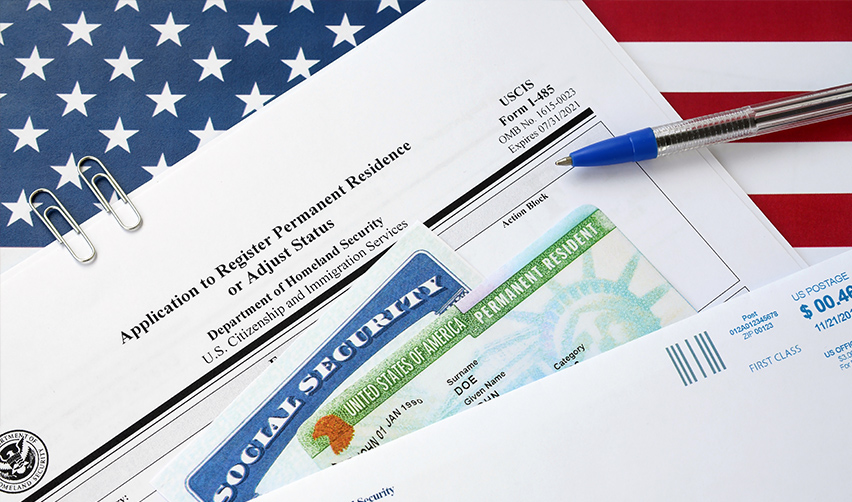
Pursuing U.S. Green Cards Through EB-5
A successful I-526E petition can provide conditional U.S. Green Cards for the principal investor, an eligible spouse, and unmarried children under 21. Once they become permanent residents, family members can generally live, work, and study anywhere in the United States.
Investors who are already lawfully present in the United States—under an eligible non-immigrant visa—may be able to file Form I-485 concurrently with Form I-526E. Concurrent filing can provide access to employment authorization and advance parole documents while the adjustment application is pending.
Further, several compelling rural and high-unemployment EB-5 projects remain available on the EB-5 market. Investments in either type of TEA qualify for the current $800,000 minimum.
In 2026, rural EB-5 projects continue to offer significant immigration benefits. The RIA reserved 20% of annual EB-5 visas for rural projects and directed USCIS to prioritize the processing of rural TEA petitions. Another 10% of EB-5 visas are reserved for investments in high-unemployment areas.
Under the RIA, EB5AN has received more than 800 Form I-526E approvals since 2022. Our approved rural petitions have averaged approximately 9.6 months, with more than 80% decided in less than one year.
Our fastest rural-project I-526E approval was issued in only 2.7 months.

Act Now and Potentially Save $100,000 Or More in Costs—File Form I-526E Before January 1, 2027
The current EB-5 investment minimums were established by the RIA:
- $800,000 for an investment in a TEA—either rural or high-unemployment—or qualifying infrastructure project
- $1,050,000 for an investment outside those qualifying areas
These amounts have remained unchanged since the RIA took effect in 2022. But they will soon increase.
The text of the RIA states when the automatic adjustment of the EB-5 amounts begins: “[…] On January 1, 2027, and every 5 years thereafter.”
The adjustment does not apply to I-526E petitions filed before January 1, 2027. Therefore, filing Form I-526E—not simply choosing an EB-5 project or even transferring the funds—is the goal for EB-5 applicants in 2026.
To invest at the current amount of $800,000, EB-5 applicants should complete the investment process and file a properly prepared Form I-526E before January 1.
Waiting until the final days of December 2026 can expose investors to a number of unnecessary risks: banking delays, holidays, missing records, and last-minute issues with the source-of-funds documents.
What is more, the financial difference between filing before or after January 1 could be very significant.
Based on the latest inflation data, the minimum EB-5 amount could rise from $800,000 to approximately $937,500 (see the section below explaining this estimate). That would mean an additional $137,500 tied up in your family’s EB-5 investment.
For perspective, $137,500 is slightly more than three years of average published tuition and fees at a private nonprofit four-year college, based on 2025–26 figures. It is also enough to buy nearly three average-priced new vehicles in the United States.
And it is about 57% more than the median U.S. household earned in an entire year in 2025.
Filing your I-526E petition before January 1, 2027, will require planning and research, especially for the source-of-funds documentation. But avoiding an additional six-figure expense is a significant benefit in your family’s journey toward U.S. Green Cards.
How much will the EB-5 investment amount increase on January 1, 2027?
Based on the latest available inflation data, the EB-5 minimum investment amount is projected to rise on January 1, 2027: the TEA minimum from $800,000 to $937,500, and the standard minimum from $1,050,000 to $1,250,000. If the final index lands slightly lower, the TEA amount would instead be $900,000—an increase of $100,000.
The final investment amounts have not been officially announced. Any figure published before the Department of Homeland Security (DHS) issues its technical amendment in the Federal Register is simply an estimate.
Nevertheless, the RIA provides a clear framework for estimating the January 1 increase.
First, the $1,050,000 standard amount is adjusted according to the cumulative change in the unadjusted Consumer Price Index for All Urban Consumers, or CPI-U, for all items in the U.S. city average. The calculation measures inflation between January 1, 2022, and the date of adjustment.
Second, the adjusted standard amount is rounded down to the nearest $50,000.
Third, the TEA and infrastructure amount is set at 75% of the adjusted standard amount.
The CPI-U index was 281.148 in January 2022. The latest available index, for August 2026, is 334.980. That represents cumulative growth of approximately 19.15%.
Applying that increase to $1,050,000 produces an unrounded standard investment of approximately $1,251,046. Rounding down to the nearest $50,000 produces a projected standard minimum of $1,250,000.
75% of $1,250,000 is $937,500.
| Investment category | Current minimum | Lower supported projection | Projection using August 2026 CPI | Increase under current CPI projection |
|---|---|---|---|---|
| Targeted employment area or infrastructure project | $800,000 | $900,000 | $937,500 | $137,500 |
| Standard investment | $1,050,000 | $1,200,000 | $1,250,000 | $200,000 |
The latest CPI projection places the calculation only slightly above the point at which the standard amount rounds down to $1.25 million. If the index used for the final adjustment falls below approximately 334.700, the standard amount could instead round down to $1.20 million. In that scenario, the corresponding TEA amount would be $900,000.
Therefore, current data supports a new investment amount of either $900,000 or $937,500, with the latest available CPI supporting the higher figure.
There is one additional factor to consider. In a July 2026 Notice of Proposed Rulemaking, DHS stated that it would also round the TEA and infrastructure investment amount down to the nearest $50,000 after setting it at 75% of the standard amount.
If DHS ultimately applies that approach to the January 2027 adjustment, a $1.25 million standard amount could still result in a $900,000 TEA minimum rather than $937,500. Because this remains a proposed rule, however, the final approach has not yet been confirmed.
The final result will depend on the inflation data used by USCIS, the actual date of calculation, and how DHS ultimately applies the statutory adjustment. Additional CPI releases before January could also impact the new EB-5 amounts.
It’s important for EB-5 investors to keep the following in mind: even using the lower estimate, the new EB-5 investment amounts would require an additional $100,000.
The second Trump administration’s immigration-policy environment also gives EB-5 investors little reason to expect costs to move downward. The administration has promoted immigration pathways involving multi-million-dollar contributions, while certain H-1B filings have been subjected to a new $100,000 fee requirement.
The trend has been clear under the Trump administration, and particularly with its immigration policies in 2026: U.S. immigration is becoming more expensive—not cheaper.
If you are interested in becoming a permanent resident of the United States, we encourage you to seize the opportunity to secure your Green Card at today’s significantly lower amounts.
How to Prepare a Strong I-526E Filing Before January 1, 2027
Submitting a complete I-526E filing typically requires many weeks—if not months—of planning and research. EB-5 investors have a challenging evidentiary standard to meet in their source-of-funds documentation. Comparing the various projects available on the EB-5 market can take time.
Further, EB-5 investors who wait until the last minute risk missing the January 1 deadline should any issues come up in their I-526E package.
Therefore, we advise EB-5 investors to begin planning their EB-5 process as soon as reasonably possible—well before January 1.
“The sooner you begin work on your EB-5 petition, the stronger your chances of success will be,” notes Ahmed Khan, Esq., Senior VP of EB5AN and a leading immigration attorney.
“The key to filing a strong I-526E package is to organize your workflow efficiently and tackle the source-of-funds documentation first,” continues Khan. “Once that crucial step has been set in motion, then you can start to evaluate different EB-5 projects and regional centers.”
“This approach makes the best use of your time as you aim for a timely Green Card approval from USCIS.”
Below is a step-by-step guide for EB-5 investors to file before the January 1, 2027, deadline—and also select a strong EB-5 project and regional center for immigration and financial success.
Step 1: Select an EB-5 Immigration Attorney
The first step should be hiring an immigration attorney, instead of spending time reviewing EB-5 projects.
An experienced EB-5 attorney can identify possible source-of-funds issues and establish a realistic filing schedule. For EB-5 investors already in the United States, an attorney can also analyze whether adjustment of status is available.
Questions to ask a prospective immigration attorney include the following:
- How many Form I-526E cases has the attorney filed under the RIA?
- Has the attorney handled the investor’s proposed source of funds and country-specific documentation?
- Who will perform the day-to-day work on the case?
- How quickly will the firm review documents and answer questions?
- Does the firm have capacity to complete the petition well before the end of 2026?
- What potential problems does the attorney see in the proposed funding plan?
It can be helpful for the investor and attorney to create a timetable. That timetable should identify the funding source(s), required documentation, translation needs, project-selection deadline, and target filing date. This will help keep the process moving in a timely manner.
Step 2: Begin Source-of-Funds Preparation Immediately
USCIS requires investors to prove that their EB-5 capital was obtained lawfully. Investors must also document the path the funds followed from their original source into the EB-5 investment.
Common sources of EB-5 funds include employment income, business profits, the sale of real estate, the sale of securities, gifts, inheritances, and loans secured by the investor’s personal assets. Each source requires different documentary evidence.
For example, a case based on the sale of property may require purchase records, proof of ownership, the sale agreement, tax documents, and bank statements tracing the proceeds. In contrast, a gifted-funds case may require documentation from both the investor and the donor, including evidence showing how the donor originally acquired the money.
Each case being unique, preparing the source-of-funds section for Form I-526E can be one of the most challenging steps of the EB-5 process.
An attorney should review the proposed source of funds before the investor commits to it. If a source is lawful but difficult to document, the attorney may recommend an alternative source.
Step 3: Evaluate the Regional Center
As the sponsor of an EB-5 project, a regional center plays a key role. Regional centers are responsible for keeping the project USCIS-compliant, overseeing the flow of EB-5 capital, and providing key documents for EB-5 investors’ petitions.
Important questions to ask a potential regional center include the following:
- How long has the regional center operated?
- How many project applications has USCIS approved?
- How many investors have received Form I-526E approvals?
- Has the regional center handled requests for evidence (RFEs) or other USCIS inquiries successfully?
- How does it monitor the use of EB-5 capital and project construction?
- How frequently does it report to investors?
- Who administers the new commercial enterprise (NCE) in question?
- What is the record for returning capital when investments reach maturity?
A regional center’s immigration record and financial record should both be considered. A regional center may have several USCIS approvals without a strong record of investor repayment. Conversely, repayment alone does not prove that a project satisfied EB-5 USCIS requirements.
Since 2013, EB5AN has helped more than 3,000 families from over 70 countries begin the EB-5 process. Our projects have received 34 Form I-956F approvals, and more than 800 investors have received Form I-526E approvals since 2022 alone.
Our investors have enjoyed permanent Green Card approvals as well as on-time repayments across multiple projects. We invite you to learn more about our track record of success—and our available projects in 2026.
Step 4: Select a Suitable EB-5 Project
The best EB-5 project is not necessarily the project with the most attractive marketing, the highest advertised return, or the shortest investment term.
EB-5 investors need to take a close look at each project’s immigration and financial risk profile.
For immigration risk, examine the following:
- Whether the project qualifies as rural, high unemployment, or infrastructure
- Whether Form I-956F has been approved or remains pending
- How jobs are being calculated
- How many jobs have already been created
- The projected job cushion above the required 10 jobs per investor
- Whether the development budget and construction schedule support the job-creation analysis
- Whether the offering can accommodate all planned EB-5 investors
For financial risk, examine the following:
- The developer’s completion and repayment history
- How much developer equity is invested
- The priority of the EB-5 capital in the project’s capital structure
- Completion, repayment, and funding guaranties
- The proposed exit strategy
- Whether projected sales or refinancing assumptions are realistic
USCIS requires every EB-5 investment to remain at risk. While guaranties and other protections can reduce risk, EB-5 investors are always open to financial loss or gain.
This makes it crucial for investors to evaluate projects carefully and make an informed decision. Investors should request financial statements and other key project documentation. If a regional center refuses to provide this basic information, this is a significant red flag.
Step 5: Complete the Investment and File Form I-526E Well Before January 1, 2027
Upon selecting a project, an EB-5 investor generally reviews and signs the subscription agreement, transfers the investment and applicable fees, and provides the final records needed for the I-526E petition.
The immigration attorney then completes Form I-526E and the supporting evidence. Before filing, the legal team should confirm that the information across the I-526E package, especially the source-of-funds section, is consistent throughout.
We strongly recommend establishing an internal deadline several weeks before January 1, 2027. Filing early will leave a comfortable margin for any issues that may arise.
EB5AN is offering free consultations for investors who want to file before the January 1 deadline. We can help you connect with an experienced immigration attorney and get a head start on the filing process.
Now, we invite you to consider our portfolio of institutional-quality EB-5 projects. Spanning both rural and urban TEAs, as well as a variety of real estate asset classes, our projects offer an unparalleled degree of financial and immigration safety.
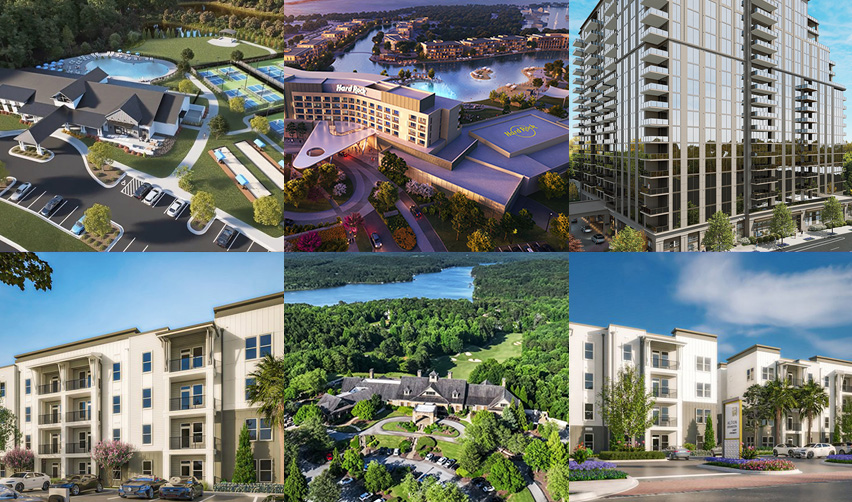
EB5AN’s Rural and Urban Projects in 2026
-
Currahee Club (Rural, Senior Loan)
Currahee Club is a 1,087-acre master-planned residential and recreational community in Toccoa, Georgia. The rural project includes homes, residential lots, condominiums, duplex townhomes, and established amenities centered around a golf course in the Troon Privé network.
USCIS has approved the project’s Form I-956F. The project is expected to create approximately 1,652 qualifying jobs, or about 18.8 jobs per investor. The EB-5 investment is structured as a senior loan secured by a first-priority security deed and pledges of membership interests. The offering also includes job-creation and Form I-526E refund guaranties.
-
Hard Rock Pointe Vista (Rural and Urban, Senior Loan)
Hard Rock Pointe Vista is a major hospitality and resort development near Lake Texoma on the Oklahoma–Texas border, approximately 100 miles from Dallas. The development includes a 217-room Hard Rock hotel, 131 condominium units, and a 10.3-acre Caribbean Bay water feature.
The project qualifies as both rural and high unemployment, and USCIS has approved its Form I-956F. More than 480 qualifying jobs have already been created—enough for 48 EB-5 investors—and the completed development is projected to create more than 5,700 jobs. The secured senior-loan structure includes real estate mortgages, an equity pledge, and additional guaranties.
-
Spring Haven (Urban, Loan)
Spring Haven is a 700-home active-adult community in Newnan, Georgia, developed under Kolter Homes’ Cresswind brand. The project qualifies for the $800,000 minimum as a high-unemployment TEA investment.
USCIS has approved the project’s Form I-956F, and more than 1,300 qualifying jobs have already been created—enough to satisfy the job-creation requirement for all planned EB-5 investors. The offering uses a secured loan structure and includes a repayment guaranty from The Kolter Group.
-
Brandon Multifamily (Urban, Loan)
Brandon Multifamily is a 280-unit rental community in Brandon, Florida, near the Tampa metropolitan area. Planned amenities include a clubhouse, swimming pool, fitness center, dog park, and coworking space.
The urban project qualifies for the current $800,000 targeted employment area minimum and has received Form I-956F approval. The loan offering has a three-year term and includes security, a repayment guaranty from The Kolter Group, a job-creation guaranty, and a Form I-526E refund guaranty.
-
Brandon Multifamily (Urban, Equity)
Investors seeking an equity structure can participate in the same 280-unit Brandon development through a separate offering. The equity investment provides a 5% annual preferred return and a stated three-year term, subject to the offering documents and EB-5 requirements.
The project benefits from the same experienced developer, qualifying urban location, and approved project documentation. The offering also includes job-creation and Form I-526E refund guaranties.
-
Elyse Atlanta (Urban, Loan)
Elyse Atlanta is a 194-unit luxury condominium tower in Atlanta’s Buckhead neighborhood, adjacent to the St. Regis Atlanta. The development includes approximately 63,000 square feet of amenities, and construction is underway. More than $100 million of condominium presales have already been recorded.
The project has created more than 280 qualifying jobs to date and is projected to create approximately 3,026. The three-year secured loan includes a repayment guaranty from The Kolter Group, along with completion, job-creation, and Form I-526E refund guaranties.

Secure Your U.S. Green Cards in 2026—Save $100,000 Or More
September 30 was an important deadline, but it was not the end of the EB-5 Regional Center Program.
Investors can still select an EB-5 project, file Form I-526E, and pursue Green Cards for themselves and eligible family members. Rural and qualifying urban EB-5 projects remain available at the current $800,000 minimum.
The next important deadline for EB-5 applicants is the January 1, 2027, adjustment of the minimum investment amounts.
The latest inflation data indicates an investment increase of at least $100,000 and potentially $137,500.
If you and your family would like to invest at the current $800,000 requirement, we invite you to schedule a free consultation with EB5AN. Our team is here to help you at every step of the process.
“The remaining months of 2026 are a valuable opportunity for H-1B holders and other foreign nationals,” Silverman concludes. “With the current amount of $800,000, EB-5 applicants have enough time to research projects, assemble a strong I-526E package, and begin the immigration process with USCIS.”
“We invite you to seize this opportunity to become a permanent resident of the United States—and potentially save over $100,000.”